


Venezuela Flight Operations for U.S. Operators: What’s Changed and What to Watch
The return of flight activity between the United States and Venezuela is creating new operational opportunities for business aviation operators, particularly those operating U.S.-registered aircraft.
But while direct flight restrictions have eased, Venezuela remains a highly compliance-sensitive operating environment governed by active U.S. sanctions controls and authorization requirements.
For many operators, the primary challenge is no longer simply whether a flight can physically operate into Caracas (SVMI). A key question is whether the mission structure, counterparties, payment flows, and operational support chain align with applicable compliance review requirements.
At the same time, increasing activity at SVMI has also resulted in updated local arrival and departure procedures that operators should review before operating.
Refer to the official OFAC program here.
Ops Snapshot
- The U.S. has rescinded the 2019 flight suspension affecting direct flights between the United States and Venezuela.
- U.S.-registered and N-registered aircraft can now be evaluated for Venezuela missions again, but operations remain tied to OFAC sanctions compliance.
- Venezuela remains an approval-driven operating environment with active U.S. sanctions restrictions still in place.
- Updated procedures are now in place at Caracas / Simón Bolívar International Airport (SVMI), including revised arrival, CIQ, luggage, parking, and terminal processes.
- Operators should expect additional documentation review, screening requirements, and longer planning lead times than typical Latin America operations.
- Trip support feasibility depends heavily on whether the mission structure, passengers, vendors, payment flow, and authorization framework comply with applicable U.S. requirements.
What Actually Changed
The biggest operational shift in 2026 is that the United States rescinded the 2019 suspension that had significantly limited direct U.S.–Venezuela flight activity.
As a result, operators are again evaluating missions into Venezuela, particularly into Caracas (SVMI), and local flight activity has started increasing.
This is especially significant for operators of U.S.-registered aircraft that were previously impacted by the earlier U.S. restrictions.
However, Venezuela remains subject to an active U.S. sanctions framework, and operators should not interpret the return of flight activity as a removal of compliance obligations.
Why Venezuela Missions Remain Different
The primary operational challenge is not airport access itself.
For U.S. operators, mission feasibility is closely tied to authorization, compliance review, and the ability to validate all parties and services involved in the operation.
A mission that appears operationally straightforward may still become difficult to support if documentation, counterparties, or payment structures create compliance concerns.
For many operators, the planning process now begins with questions such as:
- What is the legal basis of the trip?
- Does the activity fall under an applicable authorization or general license?
- Who are the passengers, vendors, and receiving parties?
- How will payments be processed?
- Are any restricted entities or sectors involved?
Those answers can directly affect whether services are supportable.
Review current general licenses here.
What Determines Whether a Trip Is Supportable?
Authorization drives the operation.
If the trip aligns with a valid authorization framework or applicable OFAC general license, operators can typically move forward with operational support, including:
- Ground handling
- Fuel coordination
- Permits
- Crew services
- Passenger support
- CIQ coordination
If that authorization chain is incomplete or unclear, support options may become limited.
In some situations, operators may still receive planning guidance, but actual ground services may not be arranged until compliance review is completed.
This creates a different planning environment than many international destinations, where operational arrangements are often finalized before documentation review is completed.
Venezuela Permit Structure Updates
According to current May 2026 operational guidance from INAC, Venezuela now utilizes multiple permit categories tied to aircraft stay duration and operating scope.
7-Day Permit
According to current operational guidance, the 7-day permit:
- Is valid only for operations in and out of a single airport of entry
- Does not permit domestic flights within Venezuela
- Is limited to six 7-day permits within a 12-month period
Required documentation must be submitted at least 72 hours prior to arrival and includes:
- Complete flight schedule
- Airworthiness certificate
- Aircraft registration certificate
- Insurance certificate
- Radio station license
- Crew licenses, medical certificates, and passports
- Passenger passports
- ICAO departure flight plan
- Departure General Declaration including all passenger details
Current guidance also states that the passenger information on the departure General Declaration must match the passenger information submitted with the permit request. According to the guidance provided, passenger discrepancies or additions after permit approval may result in the permit being voided until a new approval is obtained.
15-Day, 30-Day, 90-Day, 180-Day, and One-Year Permits
According to current operational guidance, Venezuela also offers:
- 15-day permits
- 30-day permits
- 90-day permits
- 180-day permits
- One-year permits
These permit categories allow domestic operations to controlled airports, provided the aircraft enters and departs Venezuela through an airport of entry.
Current operational guidance states the following permit limitations and fees:
- 15-day permit: limited to six permits per 12 months; INAC fee of 110 EUR
- 30-day permit: limited to one permit every two months; INAC fee of 210 EUR
- 90-day permit: limited to one permit per year; INAC fee of 410 EUR
- 180-day permit: limited to one permit per year; INAC fee of 820 EUR
- One-year permit: INAC fee of 1,700 EUR
The guidance also states that extending a one-year permit may require the aircraft to be treated under temporary admission rules and may trigger customs taxes based on aircraft value. The listed INAC extension fee is 1,300 EUR.
Additional Documentation Requirements
According to current operational guidance, permits beyond seven days may require additional documentation including:
- Airworthiness certificate
- Aircraft registration certificate
- Insurance certificate
- Crew licenses and medical certificates
- Proof of no outstanding Venezuelan navigation fees
- Aircraft ownership or lease documentation
- Owner passport or management company documentation
- Corporate incorporation documents and shareholder meeting minutes translated into Spanish where applicable
- Authorization letter or power of attorney authorizing permit processing
- Temporary admission documentation issued by SENIAT where applicable
Current guidance indicates these permit applications may require at least 10 days for processing after all required documentation has been submitted and validated by INAC in Caracas.
Flight Authorization Requirements
According to current operational guidance, the 15-day, 30-day, 90-day, 180-day, and one-year permits are not considered open permits.
Operators or service providers are still required to submit flight details for each operation, including:
- Complete schedule
- Routing
- Crew information
- Passenger information
Crew Electronic Visa Considerations
Current operational guidance also recommends that crew members operating domestic flights carry Venezuelan electronic visas.
According to the guidance provided, some domestic airports may not consistently accept standard Gen Dec treatment for crew members and may otherwise assess local entry charges.
The Venezuelan electronic visa portal is available at:
https://cancilleriadigital.mppre.gob.ve/login
Updated Arrival and Departure Procedures at SVMI
As activity begins returning, Universal Aviation Venezuela reports that local procedures at Caracas / Simón Bolívar International Airport (SVMI) have also been updated.
Operators should now review updated procedures involving:
- General aviation terminal processing
- CIQ flow
- Luggage supervision
- Ground transportation coordination
- Parking coordination
- Arrival and departure procedures
The GA process at SVMI is centered around the Terminal Auxiliar.
Operators should also expect a more structured arrival and departure process than many regional business aviation destinations. Current procedures at SVMI include advance passport information submission prior to arrival, National Guard and K-9 screening procedures, multiple baggage inspection points, and coordinated escort procedures between the aircraft and the GA Terminal (“Terminal Auxiliar”).
For international departures, operators should also account for additional coordination tied to immigration clearance, ICAO flight plan approval, baggage screening, and aircraft repositioning between remote parking positions and Ramp #1 at the GA terminal.
Larger aircraft operating RON missions may also be required to reposition from the GA terminal area to assigned remote parking positions after passenger disembarkation.
Operators with previous Venezuela operating experience should review current procedures before operating.
What Causes Missions to Fail or Delay?
Many operational issues originate during compliance validation rather than during the flight itself.
Typical issues may include:
- Incomplete trip justification
- Passenger or vendor screening concerns
- Payment routing complications
- Documentation gaps
- Incorrect assumptions regarding permitted activity
- Limited schedule flexibility during the review process
One of the more common operational mistakes is treating Venezuela like a routine regional destination and beginning coordination too late in the planning cycle.
What Operators Commonly Get Wrong
“If flights are operating again, the restrictions must be gone.”
Incorrect.
Venezuela remains subject to active U.S. sanctions restrictions and compliance requirements.
“If the airport is open, the trip is supportable.”
Not necessarily.
Operational support may still depend on the mission structure, counterparties, authorization basis, and compliance review.
“This is mainly a permit issue.”
In many cases, permit coordination is only one part of the review process.
Compliance validation may affect whether operational support can move forward.
Operational Reality at SVMI
Flight activity is increasing, but operators should still expect:
- Additional pre-trip coordination
- Extended documentation review
- Compliance screening requirements
- Closer scrutiny of vendors and counterparties
- Longer lead times than standard regional operations
Operators should validate current procedures and requirements close to departure rather than relying on historical operating assumptions.
Expert Perspective
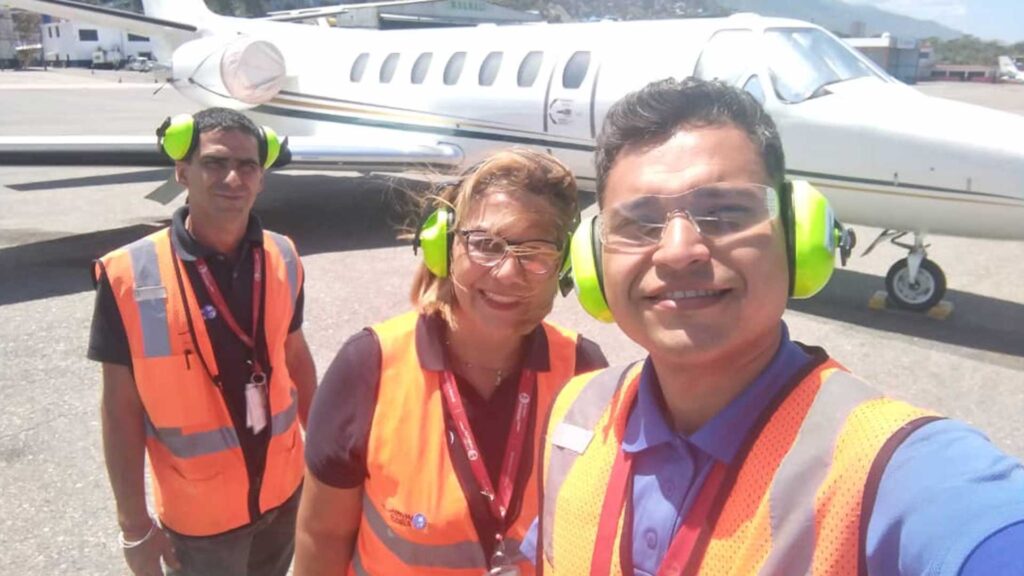
Universal Aviation Venezuela is a U.S.-owned company that operates in compliance with applicable U.S. laws and has maintained continuous operations in Venezuela for more than 40 years.
“While missions can now be evaluated and planned again, Venezuela remains subject to an active U.S. sanctions framework,” according to Universal Aviation Venezuela’s May 2026 operational update. “Operators should continue to review each trip carefully, maintain appropriate documentation, and ensure that vendors, services, payment flows, passengers, crew, and aircraft are reviewed under their own compliance procedures.”
Bottom Line
Venezuela is accessible again for certain U.S. operations, but it remains a highly compliance-sensitive operating environment.
Successful missions depend on early validation of the legal and operational framework, sufficient planning lead time, and careful coordination across all parties involved in the trip.