


Middle East Airspace Closures: Operational Impact on Business Aviation and GA Flights
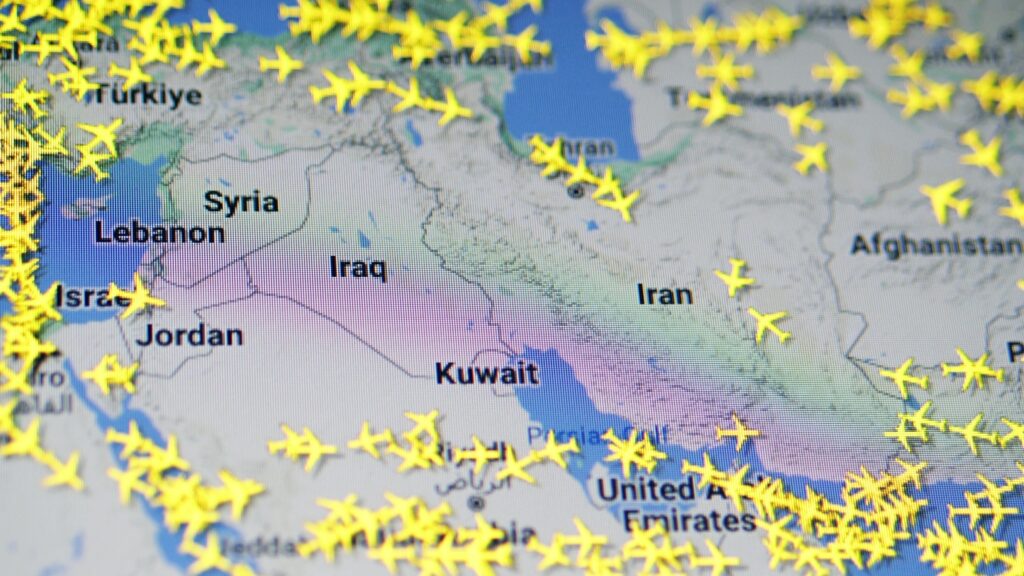
Current Operational Snapshot
Multiple Middle East FIRs remain operationally constrained despite partial reopenings and recent NOTAM extensions.
- Bahrain, Qatar, UAE, Kuwait, and portions of Iran continue operating under approval requirements, structured routing systems, or partial closure procedures.
- Traffic remains compressed into a limited number of viable Europe-Asia routing corridors.
- Operators should expect flow management measures, tactical ATC handling, reroutes, and reduced operational flexibility.
- Historical routings and previously approved permissions should not be assumed valid.
- Additional contingency fuel, alternate routing options, and continuous NOTAM monitoring remain essential.
The Middle East Routing Environment Remains Structurally Constrained
The Middle East routing environment remains structurally constrained despite several FIRs remaining technically open.
The operational issue is no longer broad airspace closures alone. The challenge is the growing complexity created by approval-based access, fixed routing structures, compressed traffic flows, tactical ATC handling, and rapidly changing NOTAM conditions.
Several Gulf FIRs that were previously operating normally are now functioning under partial closure procedures, mandatory routing structures, tactical ATC handling, or prior approval requirements. The result continues to be compressed Europe-Asia traffic flows through fewer usable corridors and reduced operational flexibility across the region.
“Open” airspace still does not mean normal operations.
What Changed Since the Initial Closures
Recent NOTAM extensions and revisions confirm that multiple Gulf and Middle East FIRs remain operationally constrained longer than originally anticipated.
The operational challenge is no longer broad regional closure alone. The issue is the growing complexity created by approval-based access, fixed routing structures, compressed traffic flows, tactical ATC handling, and dependency on adjacent FIR availability.
Several FIRs that were previously operating under emergency restrictions are now functioning inside tightly managed routing structures with limited reroute flexibility, mandatory routing requirements, flow management measures, and ongoing NOTAM revisions.
Current operational changes include:
- Syria remains largely closed, with only limited Aleppo arrival and departure operations permitted via designated routes.
- Bahrain has issued revised routing structures, prohibited route segments, and continued prior approval requirements for all flights.
- Qatar restrictions have been extended through at least June 30, with arrivals, departures, and overflights limited to designated corridors.
- UAE partial closure procedures have been extended through at least June 23, with traffic restricted to approved routing structures.
- Kuwait continues operating under prior approval procedures.
- Iran continues operating under significant restrictions, including airport suspensions, approval requirements, and active security advisories.
The routing system remains operational, but highly managed.
Current FIR Status Overview
Azerbaijan (UBBA)
Azerbaijan remains open with no routing restrictions currently in place.
Bahrain (OBBB)
Bahrain FIR remains operational under prior approval procedures and a highly structured routing environment.
Recent NOTAM revisions established new mandatory routing corridors, prohibited route segments, and revised arrival, departure, and overflight procedures. All flights remain subject to prior approval from Bahrain Civil Aviation Affairs.
Operators should continue expecting:
- Restricted routing flexibility
- Mandatory use of published routing structures
- Tactical ATC flow measures
- Congestion-driven reroutes
- Dependence on adjacent FIR availability
This is not unrestricted Gulf routing.
Iran (OIIX)
Iran continues operating under significant restrictions.
Current NOTAMs suspend operations at airports throughout both western and eastern portions of Tehran FIR, with only limited exemptions for specific airports, state activity, SAR, military operations, humanitarian flights, and flights operating under direct Civil Aviation Authority approval.
Previously issued permissions for commercial operations have been suspended, and operators should not assume prior approvals remain valid.
Additional Iranian CAA security advisories remain active regarding elevated military activity, potential GNSS interference, communication disruptions, military interceptions, and short-notice airspace restrictions.
Operators should continue treating Iranian airspace as a high-risk operating environment requiring enhanced risk assessment and contingency planning.
Iraq (ORBB)
Iraq remains open and available for transit operations.
Some reroutes and tactical ATC handling should continue to be expected as regional traffic remains compressed into fewer available corridors.
While Iraq remains available for transit operations, operators should continue validating routings prior to departure as adjacent FIR restrictions may impact available routing options.
Israel (LLLL)
Israel remains operational; however, numerous airways remain unavailable, restricted, or subject to tactical ATC handling and route-specific approval requirements.
Operators should continue monitoring route availability closely as airway status remains dynamic and subject to ongoing NOTAM revisions.
Jordan (OJAC)
Jordan remains open with no routing restrictions currently in place.
Kuwait (OKAC)
Kuwait FIR remains operational under prior approval procedures.
Operators should continue expecting routing coordination requirements and potential impacts from adjacent Gulf FIR restrictions. Previous approvals should not be assumed valid for current operations.
Flights entering the FIR without updated approval remain subject to:
- Delay
- Refusal of entry
- Tactical ATC rerouting
- Diversion risk
Oman (OOMM)
Oman remains operational and continues supporting multiple contingency routing structures.
Temporary bidirectional routing segments and contingency airway structures remain active as regional traffic compression continues affecting Gulf traffic flows.
Operators should continue monitoring routing validity closely as adjacent FIR restrictions continue impacting onward route availability.
Qatar (OTDF)
Qatar FIR remains under partial closure procedures.
Current restrictions have been extended through at least June 30 and continue limiting arrivals, departures, and overflight traffic to designated corridors and waypoint structures.
Operators should continue planning for:
- Limited reroute flexibility
- Tactical sequencing
- Flow restrictions
- Routing dependency on neighboring FIR availability
- Temporary airway closures tied to special activity NOTAMs
The operational issue is no longer whether Doha FIR is technically open. The issue is that routing options remain compressed and highly structured.
Saudi Arabia (OEJD)
Saudi Arabia remains open and operational.
Operators are still advised to carry additional contingency fuel and maintain multiple routing options due to the potential for tactical reroutes and regional traffic compression.
Saudi Arabia continues serving as an important routing option for traffic avoiding more restricted portions of regional airspace.
Syria (OSTT)
Damascus FIR remains largely closed.
Current NOTAMs permit only limited operations associated with Aleppo Airport arrivals and departures via designated routing structures. Overflight access remains highly restricted, and operators should continue planning around Syria as unavailable for normal transit operations.
Operators should expect:
- Limited access through published Aleppo arrival and departure routes
- Minimal routing flexibility
- Potential reroute dependency on adjacent FIR availability
- Continued requirement for close NOTAM monitoring
The operational challenge is not whether Syria is technically available. The challenge is that access remains highly restricted and subject to ongoing operational limitations.
UAE (OMAE)
The Emirates FIR remains partially closed under structured traffic management procedures.
Recent NOTAM extensions continue partial closure procedures through at least June 23, with overflight and departure traffic restricted to designated routing structures, entry points, exit points, and contingency corridors.
Dubai-area airports remain accessible, but under compressed routing conditions that reduce operational flexibility and increase congestion risk.
Operators should continue planning for:
- Tactical reroutes
- Flow management measures
- Longer routings
- Reduced recovery flexibility during disruptions
- Increased dependency on adjacent FIR conditions
- Temporary airway suspensions and routing limitations
The Operational Reality: Compression, Not Closure
The largest operational challenge is no longer whether airspace is technically open.
The issue is that traffic is increasingly being funneled through approval-based routing systems, fixed corridors, and a smaller number of viable transit options across the Gulf region.
This continues creating:
- ATC flow restrictions
- Tactical reroutes
- Departure sequencing delays
- Approval-related delays
- Increased fuel burn
- Reduced alternate flexibility
- Routing revalidation following NOTAM revisions
- Higher disruption risk during weather or recovery events
Even partially reopened FIRs continue operating under conditions that materially reduce routing efficiency.
Most Common Operator Mistakes
Operators continue running into problems by:
- Assuming a partially reopened FIR restores normal routing capability
• Assuming a currently open FIR provides unrestricted routing flexibility
• Filing historical routings without validating current airway availability
• Underestimating congestion across southern Gulf corridors
• Carrying insufficient contingency fuel for reroutes or holding
• Treating approvals as static rather than operationally dynamic
• Assuming previously approved routings remain valid after NOTAM revisions
What Causes Missions to Fail or Delay
Most current disruptions are now being caused by secondary operational effects rather than direct closures.
Typical failure points include:
- Last-minute routing amendments
- Approval-related delays
- Routing revalidation following NOTAM revisions
- Permit revisions tied to routing changes
- Flow management delays in compressed corridors
- Insufficient fuel margins
- Loss of alternate flexibility
- Adjacent FIR restrictions impacting otherwise valid routings
Small planning assumptions continue creating disproportionate operational impact.
Expert Perspective
“The biggest mistake operators are making now is assuming that an open FIR means normal operating conditions. Across much of the region, traffic is moving through tightly managed routing systems that depend on approvals, published corridors, neighboring FIR availability, and tactical ATC measures. The airspace may be available, but operational flexibility remains significantly reduced,” says Greg Murray, Master Flight Planner, Universal Weather and Aviation.
Operator Guidance
Operators should continue planning conservatively across the Middle East region.
Recommended practices include:
- Validate routings immediately prior to departure
- Carry additional contingency fuel beyond normal planning margins
- Prepare multiple routing scenarios in advance
- Maintain flexibility on permits and schedules
- Identify alternates outside restricted FIR structures
- Continuously monitor NOTAM updates across adjacent FIRs
- Build schedule buffer into ETDs and onward mission planning
Bottom Line
The Middle East airspace environment remains operational but highly constrained.
Broad regional closures have given way to a more complex operating environment characterized by approval requirements, fixed routing structures, partial closures, flow management measures, and compressed traffic flows.
Operators that continuously validate routings, maintain schedule flexibility, and plan for contingency scenarios continue operating successfully. Those relying on historical assumptions, previously approved routings, or outdated NOTAM information remain exposed to disruption.