


France: 2026 Business Aviation Destination Guide
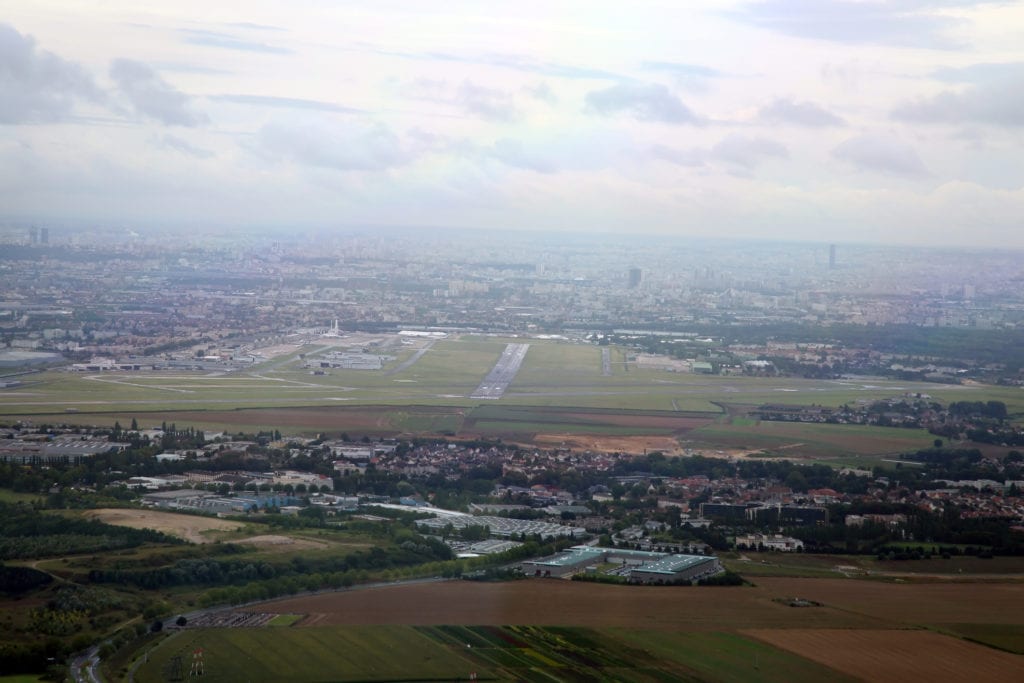
For more information on France, visit our destination and high-traffic event guides:
France looks simple on paper. Parking is available, permits are routine, handlers are experienced. Then a schedule shifts, the PPR was tied to the original slot, fuel trucks stop running for the weekend, and CIQ is no longer where you expected it to be. This is a market where sequencing matters more than paperwork.
Parking drives access, access drives permits, permits drive fuel and CIQ. Break that chain in the wrong order and the operation unravels fast.
You think you’re set. Parking’s confirmed, permits are in. Then you land and find out the PPR was tied to a schedule you changed three days ago.
Access starts with parking, not runways
Prior Permission Required is the first real gate in France, and it is usually about parking, not airspace. Paris Le Bourget is the most visible example, but PPRs apply across the country and can be seasonal or tied to specific events.
Handlers request PPRs from airport authorities or local Chambers of Commerce, particularly at regional airports. Once the schedule is submitted, the PPR is bound to it. Change the timing and the approval may no longer be valid. The confirmation number must be included in Item 18 of the flight plan. Miss that, and ATC may not associate your flight with the approval on record.
This is a common failure chain. An operator adjusts arrival time inside a peak window. The PPR was issued against the original schedule. The flight plan updates, but the PPR does not. On arrival, parking is no longer available and the aircraft is held or forced to reposition.
The fix is simple but unforgiving. Lock the schedule before requesting PPR and resubmit immediately if anything moves.
Permits are routine until the documents are not aligned
Charter flights require landing permits. Experimental aircraft require permits. Non‑EU charter operators must obtain permits or risk grounding and impounding.
The official lead time is two business days, excluding weekends and holidays. Fifth and seventh freedom exemptions require two additional days. All operators must be TCO‑approved before the process starts.
What causes delays is not the permit itself, but how the documents are submitted. France requires synchronized submission. GENDEC, passenger manifest with place of birth for every occupant, and proof of an approved Safety Management System must be submitted as a single package with matching operator details. Submitting documents separately almost always slows processing.
Permit confirmation does not need to be referenced in the flight plan, but it must be available for inspection. This applies to Schengen and non‑Schengen flights.
Permit validity is plus or minus 72 hours. Move outside that window and re‑confirmation is required. Re‑confirmation is usually possible within 24 hours during weekday CAA hours. Change or add a destination within France and you are starting over with a new permit.
There are no government fees, except for experimental aircraft, but handlers may charge for support.
EU registration does not eliminate permit exposure
EU‑registered charter aircraft under 20 seats, below 10 tons MTOW, or with sales revenue under €3,000,000 do not require charter permits. That exemption stops at the border. International charter legs inbound or outbound from France with EU‑registered aircraft do require permits, following the same process as non‑EU operators.
Assuming an EU tail number removes permit risk is another common planning break.
Crew qualification limits are enforced, not assumed
France applies ICAO standards on crew age and medicals. The captain must be under 60, and the first officer under 65, both holding valid first‑class medical certificates and appropriate type ratings.
Where it breaks: crew planning assumes availability without verifying age or medical validity against local enforcement. The issue does not surface during scheduling. It shows up during ramp checks or pre‑departure review, when there is no time to adjust crew.
Solidarity tax is now a real cost line
Effective March 1, 2025, France introduced new solidarity tax rates on non‑scheduled commercial flights. The tax is based on destination bands and aircraft category. Turbojet aircraft see the steepest increases, with long‑haul flights reaching up to €2,100 per passenger.
There are reduced rates for specific routes, such as Corsica to mainland France, but most business jet operations will see higher costs, particularly mid‑range and long‑haul.
This is not something to discover after the trip is planned. Route structure and aircraft category directly affect total cost.
Cabotage is actively enforced
France monitors cabotage closely. For private operations, only non‑revenue flights carrying family members or company employees are permitted. Charter operators must operate strictly to the passenger list approved in the landing permit.
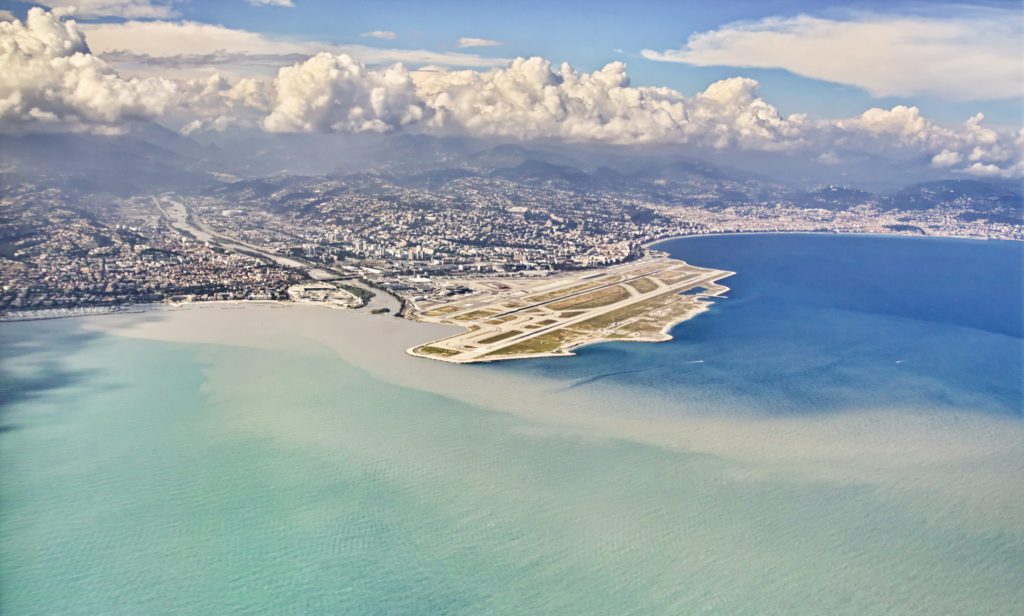
Any change to the manifest requires a formal permit revision before flight. This is heavily scrutinized at Nice and Paris Le Bourget, where documentation checks are routine.
Failure chain: passenger change after permit issuance, manifest mismatch, cabotage violation, fines and possible aircraft detention.
Flight planning works, until slots and remarks are wrong
Flight plans are filed through Eurocontrol. Airways are standard, with directs limited to very short flights. File at least three hours prior to departure to manage traffic flow and slot assignment.
If a PPR or slot is required, it must be reflected in the flight plan. The destination ground handler should be referenced in Item 18 so ATC can route the aircraft correctly on arrival.
There is no need to call ATC for confirmation unless the crew self‑filed. Handlers verify plans through the Network Manager system and manage changes if needed.
At Nice and Cannes, failing to include slot or permit details in the flight plan can lead to airborne holding or denial of access, even when approvals technically exist.
Engine start is the activation point
In France, ATC approval is required before engine start. That clearance activates the flight plan. Some parking positions require towing to the startup point. Major airports like Le Bourget have towbars for common business aircraft, but this is not guaranteed at regional fields.
Assuming self‑powered departure without confirming tow requirements can turn a short turnaround into a delay.
Mandatory security search, every flight
All departing aircraft must undergo a security search performed by the crew on the day of departure. The captain signs the security search form and submits it to the handler.
There are no exemptions. Registration, operation type, and even helicopter flights from Monaco are included. If the form is not completed and submitted, departure can be blocked.
Fuel planning breaks on weekends and at regionals
Fuel shortages occur, particularly at Nice, Cannes, and Marseille, often on weekends. Highway restrictions limit fuel truck movements from Friday evening through Sunday night.
The mitigation is straightforward. Uplift fuel on arrival for weekend operations and reconfirm availability in advance. At regional airports, even pre‑arranged fuel can be slow, with commercial traffic taking priority.
Passengers may remain onboard during fuel uplift, which helps, but only if the truck is actually there.
CIQ varies by airport, not by expectation
GENDEC is mandatory for all flights. International arrivals clear customs and immigration onboard, at an FBO, or at the main terminal depending on the airport.
At Le Bourget, police are advised in advance and clearance typically takes 5 to 20 minutes for standard business aircraft. Groups over 30 take longer. At regional airports, clearance often occurs at the commercial terminal and can exceed an hour during peak periods.
Customs may not be available without 48 hours notice, especially outside major airports. There is rarely any flexibility once you arrive.
Ramp checks are more frequent for charter flights arriving from non‑Schengen countries. Documentation needs to be complete and immediately available.
Disruptions are structural, not exceptional
 ATC strikes are common, often announced by NOTAM with limited detail and short notice. They typically occur on weekdays and are more disruptive during the summer peak.
France has roughly 25 public holidays, and August is particularly constrained. Services may be closed or operating at reduced capacity.
Peak season runs May through October, with pressure points around Paris in March, June, July, September, and October, and along the Mediterranean during major events.
Regional airports operate on different assumptions
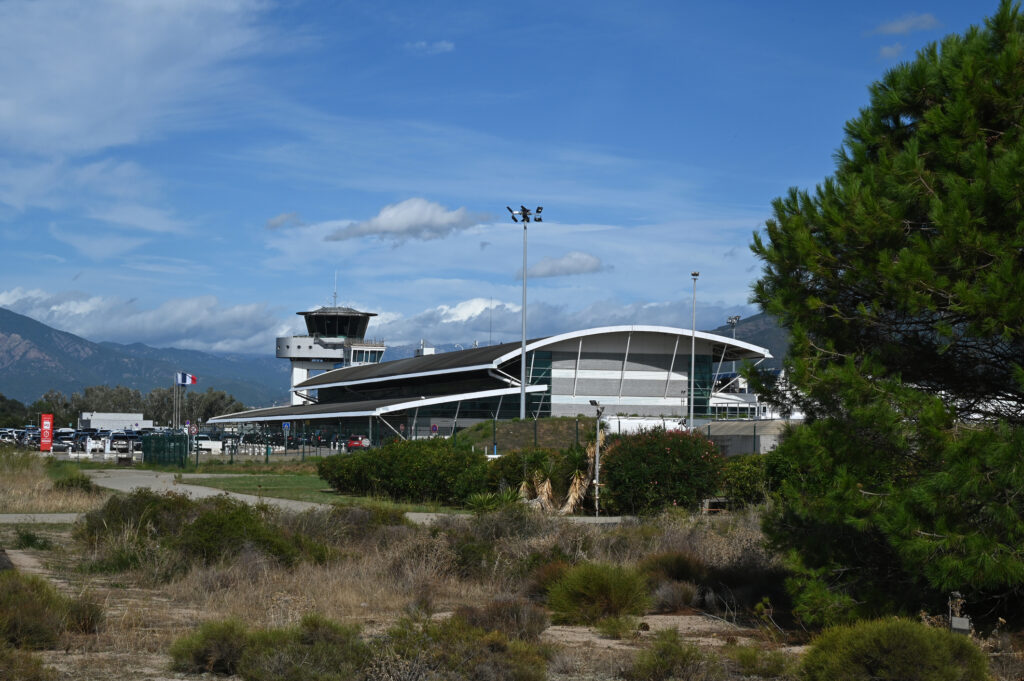
Ajaccio, France: Napoleon-Bonaparte Airport of Ajaccio in Corsica
At smaller airports, the Chamber of Commerce may act as the handler. English proficiency, ground support equipment, and service coordination can be limited. Repositioning a supervisory agent from a major city is often impractical.
Planning these stops as if they were scaled‑down major airports is where expectations fail.
What matters in France
Most breakdowns in France come from sequencing errors. A schedule change that invalidates a PPR. A permit revision that lags a manifest update. Fuel planned as if trucks run every day. CIQ assumed to be available without notice.
This is a market that works when the chain is respected and punishes assumptions when it is not.