


Middle East Airspace Closures: Operational Impact on Business Aviation and GA Flights
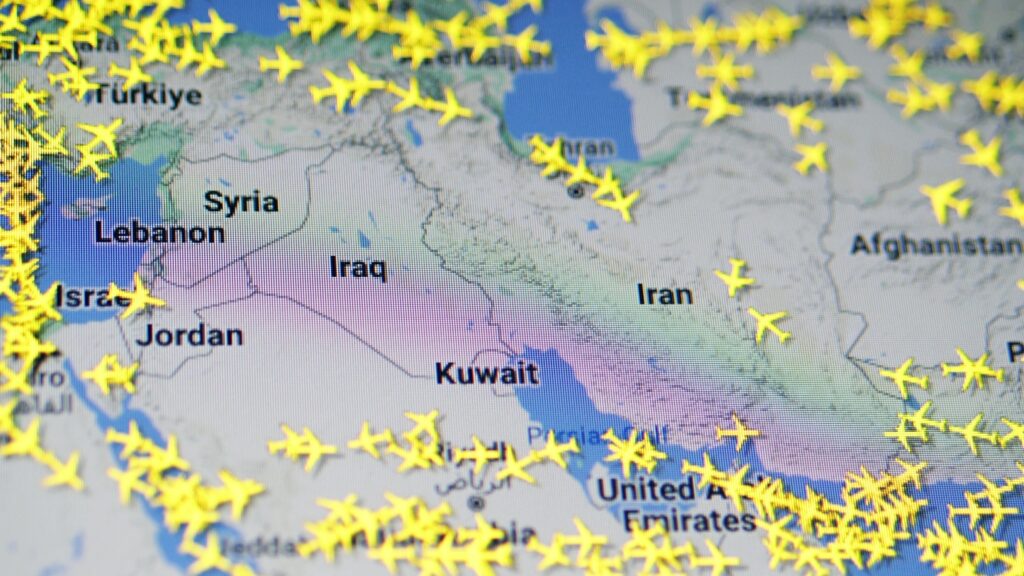
What Matters Operationally Right Now
- The central Middle East corridor is not operationally practical for standard Europe–Asia routing
- Multiple FIRs are technically open but operating under approvals, routing constraints, or reduced ATC capability
- No stable routing environment exists; corridors are congested and subject to rapid change
- “Open” airspace does not mean flexible or reliable access
- Insufficient contingency planning remains the primary cause of delays and mission disruption
Key Planning Questions
Is there a stable routing option across the Middle East right now?
No. Available corridors are limited, congested, and subject to rapid change.
Does partial reopening of FIRs restore normal routing?
No. Reopened FIRs are operating under restrictions, approvals, or procedural limitations and do not restore the central corridor.
Can operators rely on previously filed routes?
No. Routing assumptions may change within hours and must be reconfirmed prior to departure.
What is the biggest operational risk right now?
Underestimating airspace compression and not carrying sufficient contingency fuel.
Current Airspace Reality
Recent NOTAM activity confirms that while several FIRs have reopened, operations remain tightly controlled and do not represent a return to normal routing conditions.
- Azerbaijan, Jordan, Israel: No routing restrictions currently in place
- Syria (OSTT): Open for overflight but operating under procedural control only, with no radar separation and limited capacity
- Iraq: Open, but reroutes and operational variability should be expected
- Kuwait: Operationally limited and approval-based, with arrivals and departures subject to prior authorization and tactical ATC control
- Bahrain: Open but restricted to specific routings and subject to prior approval and flow measures
- Qatar: Open with tightly defined routing structures and fixed entry/exit points
- Iran: Broadly restricted, with limited exceptions; general aviation operations remain heavily constrained
- UAE: Partially open with structured routing and flow control measures
- Saudi Arabia and Oman: Open but absorbing significant rerouted traffic and operating under contingency conditions
This is a controlled, capacity-limited environment, not a normalized airspace system.
Routing Reality: Europe–Asia Traffic Is Reorganized
With the central corridor constrained, traffic has consolidated into two primary routing options:
Southern Routing
Egypt → Saudi Arabia → Oman → Indian Ocean
- Carrying the majority of rerouted traffic
- Increasing congestion across key sectors
- Subject to flow control and sequencing delays
Northern Routing
Turkey → Caucasus → Central Asia
- Operationally viable alternative
- Dependent on regional constraints and routing availability
- Reduced flexibility compared to pre-conflict conditions
Both corridors are viable but constrained.
Operators should expect:
- ATC flow management
- Tactical reroutes
- Extended flight times
- Increased fuel burn
Core Constraints
- Loss of direct central Gulf routing options
- Limited capacity across remaining corridors
- Flow control and sequencing restrictions
- Rapidly changing NOTAM environment
- Reduced availability of viable alternates
- Concentrated demand across fewer usable airspace segments
These are structural constraints, not temporary inefficiencies.
Most Common Operational Mistakes
- Assuming reopening of FIRs improves routing availability
- Planning based on historical routings without revalidation
- Underestimating congestion in remaining corridors
- Not carrying sufficient contingency fuel
- Treating “open” airspace as operationally flexible
What Causes Missions to Fail or Delay
- Late routing changes requiring permit amendments
- Insufficient fuel planning for reroutes or holding
- Overreliance on previously used routings
- ATC flow restrictions in compressed corridors
- Limited alternates due to restricted FIRs
In this environment, small planning gaps create disproportionate disruption.
Expert Perspective
“Operators see ‘open’ on a NOTAM and assume routing flexibility has returned. In reality, these FIRs are functioning under strict routing structures, approvals, or reduced ATC capability. If you plan like it’s normal airspace, you will get caught out — either in fuel planning, routing changes, or flow delays,” says Greg Murray, Master Flight Planner, Universal Weather and Aviation.
Operator Guidance
- Validate routing immediately prior to departure
- Add contingency fuel beyond standard planning margins
- Maintain flexibility on routing and overflight permits
- Identify alternates outside restricted FIRs
- Monitor NOTAM updates continuously
- Build schedule buffer into ETDs
Related Operational Guidance
For additional planning considerations and regional operating requirements:
- Middle East operations planning resources (internal link)
- Overflight and landing permit requirements by region (internal link)
- Fuel planning strategies for long-range international missions (internal link)
- NOTAM monitoring and pre-departure validation best practices (internal link)
Bottom Line
The Middle East is operating under sustained airspace compression.
Partial reopenings have not restored a stable or predictable routing environment.
Successful missions depend on conservative planning, real-time validation, and operational flexibility at every stage.