Cutting Through the Noise: A Flight Department Uses uvGO Tasks to Simplify Mission Collaboration

The Need for Change

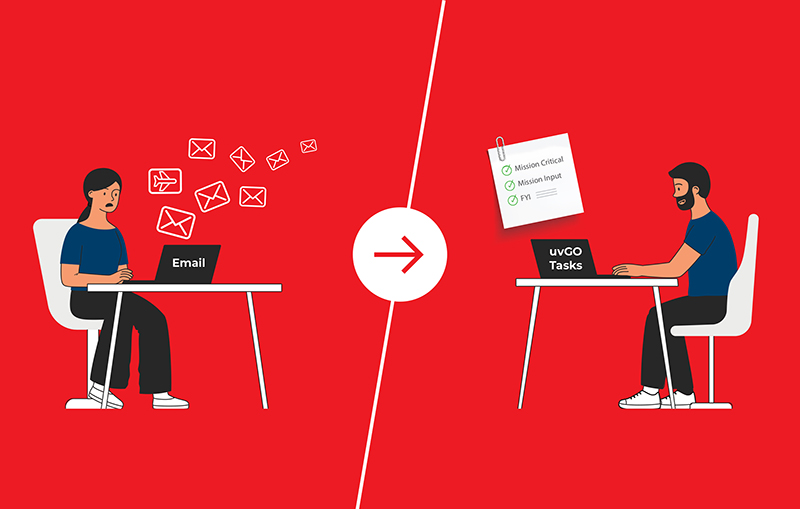
Like most flight departments, this team had robust scheduling software as the backbone of its planning. But when it came to actually executing a trip – coordinating internally and with third-party providers – the workflow still defaulted to phone calls and long email threads. This industry norm often buried critical requests in clutter. With action items scattered across multiple messages and channels, dispatchers found themselves spending more time tracking conversations than moving the mission forward – increasing stress and the risk of delays.

Finding a Solution

When invited to beta test uvGO Tasks, the department saw an opportunity to work differently. Universal designed uvGO Tasks as a mission-first communication tool, providing a centralized list of what Universal needed from the customer – from document uploads to service preferences.

Empowering Flight Departments

With Tasks, the flight department could:

  • Quickly identify urgent versus FYI requests.
  • Respond directly within uvGO, without hunting through email threads.
  • Upload documents securely with drag-and-drop.
  • View a consolidated audit trail – every comment, every submission, every change – tied to the mission, so nothing gets lost or forgotten.

Measuring the Impact

The benefits were immediate:

  • Fewer back-and-forth emails clogging inboxes.
  • Faster turnaround on responses to Universal.
  • Improved accountability and transparency across the team thanks to the audit trail.
  • Better visibility for leadership, reducing risk and improving coordination.

A More Confident Operation

Today, the department approaches each mission with greater clarity and control. Dispatchers feel more in command of their workload, while leadership has assurance that critical tasks are being tracked and completed on time.

“uvGO Tasks transformed how we collaborate with Universal. It feels like mission communication finally caught up with the 21st century.”


Take Control of Your Mission Workflow

See how uvGO Tasks can help your department simplify communication, reduce risk, and keep every mission on track.

Learn more about uvGO Tasks

Read more

Navigating New Horizons: How Universal Empowered a First-Time Aircraft Owner

A High Net-Worth Individual Enters Private Aviation

In the wake of pandemic-triggered lockdowns, global health entry requirements, and the ensuing complexities of commercial air travel, a high-net-worth individual decided to enter the world of private aviation as a first-time aircraft owner.

Motivated by the desire for freedom, flexibility, and an elevated standard of health and safety—attributes uniquely afforded by private flying, particularly for international journeys – the individual looked forward to traveling on his own terms.

Finding the Right Partner

As the anticipated delivery of the new aircraft approached, the appointed Chief Pilot sought Universal’s expertise to help navigate the challenges of supporting a first-time owner, such as managing expectations, determining the feasibility of proposed missions, and ensuring the flight department was mission-ready to handle as many mission types as possible.

Unrestricted Private Travel vs. Reality

The new owner’s expectations of unrestricted aircraft travel weren’t always in sync with the realities of international aviation regulations and restrictions. Universal helped the Chief Pilot set expectations on what missions were feasible and what some of the challenges and limitations were with some of the mission asks the owner was looking to do.

Challenging Flight Scenarios Supported

Long-Term Parking on the Med During Peak Season

One of the first missions the new owner wanted to use his new aircraft for a series of hops along the Mediterranean cost during peak season. The owner was unaware of the stringent long-term parking restrictions in the traditional hotspots, as well as the challenge of making last minute requests and changes during this time. Universal helped the flight department set realistic expectations and offer alternative solutions that accommodated the owner’s needs while adhering to local regulations and constraints.

Traveling with Pets

The new owner was very attached to their beloved golden retriever and planned to travel the world with their pet, unaware of the complex international regulations surrounding pet travel. Universal ensured the owner and their team were fully informed about the current restrictions, including some countries’ mandatory 90-day quarantine periods, preventing a potential pet and owner separation.

Avoiding Turbulence

Upon learning that the owner was particularly turbulence-averse, the Chief Pilot relayed these concerns to Universal. In response, the Universal Flight Planning team updated the operational profile on file to always prioritize routings that circumvented turbulence, embracing the philosophy that a longer, smoother journey far outweighed the discomfort of air disturbances.

Bucket Leisure Trips

Excited about his new aircraft, the owner started asking his flight department about trips to attend high-profile events like Cannes, Wimbledon, and Art Basel, as well as far-flung, Instagramable destinations well off the beaten path – like Antarctica for for skiing.

Knowing that a pop-up trip could happen at any time to anywhere, the Chief Pilot worked with Universal and its Global Regulatory Services team to ensure the aircraft was enrolled in all of the relevant regulatory programs to maximize mission readiness at a moment’s notice for anywhere in the world.

Congested Destinations and Additional Support on the Ground

Traveling to high-traffic events during peak season not only required complex planning for travel but also for managing expectations on the ground.

Universal helped alleviate many of the common pains associated with operating to congested airports and destinations where resources are strained beyond capacity by providing local Universal’s own VIP agents, who are experts in their home territories.

These agents served as an extension of Universal Trip Support on the ground and used local connections and knowledge to create a seamless experience on the ground.

Happy Owner. Happy Flight Department.

By partnering with Universal, the new aircraft owner and their team seamlessly entered the world of private aviation. Universal provided the tools, expertise, and resources to ensure a happy principal while making the  new flight department team look great.

Read more

A Million Masks in Three Hours: Turning a Business Jet into a Lifeline During the Pandemic’s Darkest Moments

While news headlines focus on sustainability concerns and climate activist protests against business aviation, what goes underreported is the missions that save lives or reunite people with their loved ones.

Universal has a long history of supporting humanitarian missions and delivering critical aid during natural disasters like earthquakes and tsunamis.

A New Threat Emerges

As COVID-19 was beginning to change the world forever, personal protective equipment (PPE) was dwindling fast, and there was a palpable fear that hospitals in the United States would not have the necessary equipment to care for the country’s rapidly growing number of COVID-19 patients.

Striking a Deal & Finding an Aircraft

In Massachusetts, Governor Charlie Baker found a source to supply much-needed PPE to his state’s overwhelmed healthcare workers. Baker struck a deal with a manufacturer, Tencent, in China for the needed PPE. However, getting it from China to the United States was going to be the hard part.

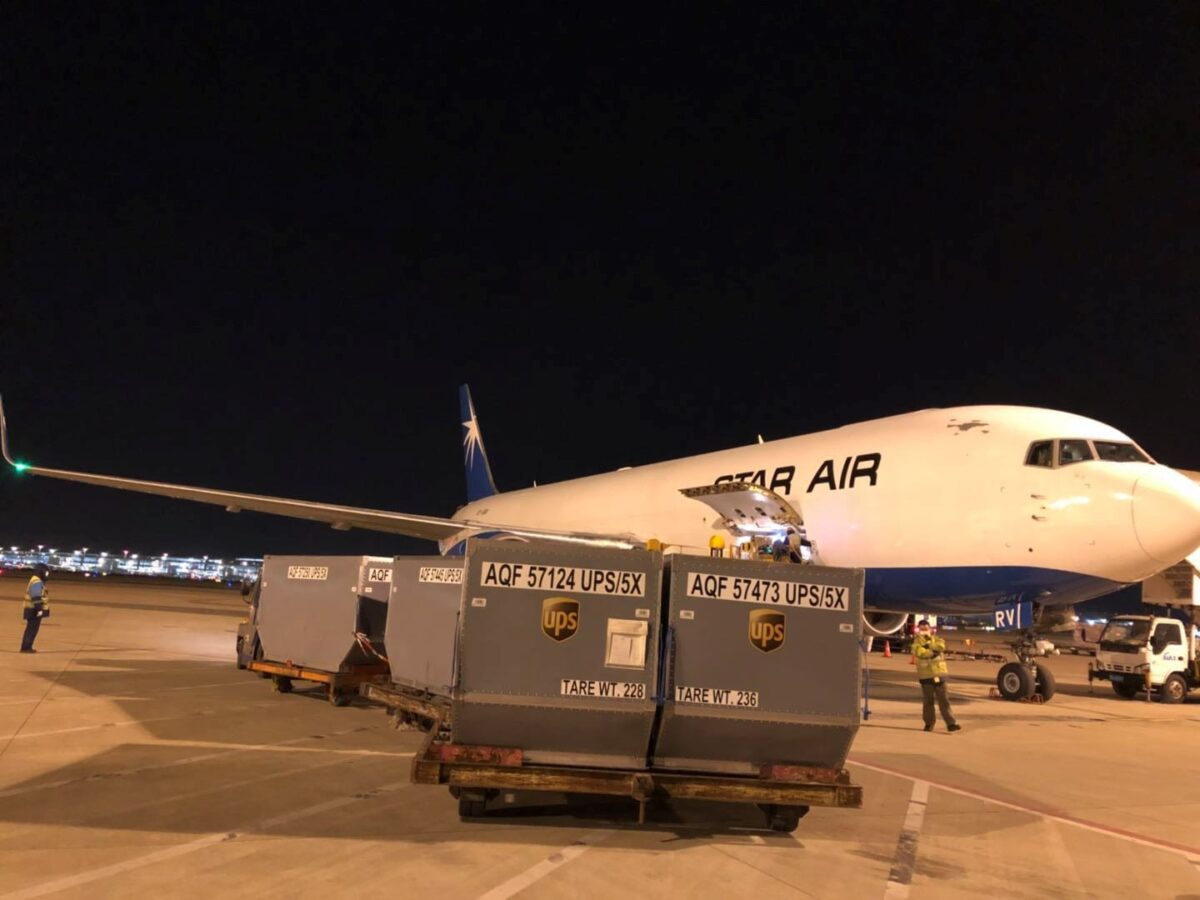
New England Patriots Owner Robert Kraft stepped up after learning about the need for an aircraft to make the delivery. Kraft offered to use the Patriots’ Boeing 767, which was usually used to charter the team to away games. With the PPE sourced and the aircraft secured, next came the logistical gauntlet of navigating the complex bureaucratic channels of embassies and civil aviation authorities.

Navigating Regulatory & Diplomatic Complexities

Having never operated this type of mission before, the Kraft group began seeking advice from fellow companies on how to proceed. One of those was a large Fortune 500 company, which had recently completed a COVID-19 repatriation flight from Morocco with the support of Universal. Trusting in Universal’s expertise and resources, this flight department recommended Universal for the mission.

Formulating the Plan

Having recently coordinated a similar mission for the CEO of a major Chinese e-commerce company, Universal knew how to pull off a mission like this quickly and the many hours of work ahead needed to pull it off, despite the challenges caused by the rapidly evolving COVID-19 restrictions. As a consultant with Kraft’s operations team, Universal’s experts laid out the plan to navigate the diplomatic waters.

It all started with the Embassies. Universal provided the procedures and best practices for how the Kraft team and Tencent in China could effectively engage their respective embassies to get the required permissions, which each company then followed.

Aircraft Modifications

In the meantime, the 767, which doesn’t usually operate internationally, needed new avionics equipment installed before it could operate to China. Universal helped the Kraft team identify what equipment was needed and what other preparations were required for this first international mission to China.

Negotiating Lead Times for Time-Critical Mission

Things got moving once the two Chinese and American Embassies started talking to each other. After each embassy authorized the trip, it was time to talk with the Chinese Civil Aviation Authority (CAA).

Typically, the Chinese CAA’s lead time is 15 days for an operating permit for any private aircraft with more than 19 seats. Obviously, this timeline wouldn’t work, as every day delayed meant potential lives lost.

Universal’s ground support office in China, Universal Aviation China, was able to leverage its relationships with the Chinese CAA to whittle the original lead time of 15 days to just a few, securing the final permissions needed to make this mission happen.

One challenge overcome…but not in the clear yet.

Three Hours to Load a Million Pieces of PPE

Due to duty-hour restrictions, the aircraft could not spend more than three hours on the ground in China, and it needed to load more than a million pieces of PPE onto the aircraft in that time – a daunting task. The Kraft flight had two full flight crews onboard, and the plan was for one crew to fly while the other slept, then they would switch roles upon arrival.

Universal Aviation China had a plan, as well. It sent a ground supervisor on a flight from Beijing to Shenzhen in advance, where the supervisor quickly sourced 25 porters to load the cargo upon the aircraft’s arrival. The supervisor then had to coordinate the pickup of the PPE from various locations in Shenzhen, as the PPE was scattered across the city in many different warehouses. The supervisor worked with Tencent, the PPE provider, to ensure all the equipment was picked up, cleared customs, and stood by for the aircraft’s arrival.

The Human Assembly Line

Once the aircraft was back on solid ground, Universal Aviation China’s ground handling team pulled the empty pallets from the cargo hold. Then, the team of 25 porters loaded each box by hand, prepping the pallets to load onto the aircraft.

Loading more than one million pieces of PPE onto a 767, even with 25 people, is usually a 5-hour job. Then, add in the aspect of everyone wearing full PPE, and the job was even more difficult. The team pulled it off in two hours and 55 minutes – meeting the three-hour window just in the nick of time.

A Message of Gratitude

Shortly after the flight took off en route to Anchorage, the Universal team received the following message from the Kraft team.

“I cannot thank everyone enough for all the efforts over the past week and some longer to make this mission a success.  While the overall mission is not complete, we have departed Shenzhen for our journey to Alaska and onto Boston and New York to deliver these life-saving supplies to those doing battle on the ground.

Our doctors, nurses, and first responders have been heralded as heroes for good reason, but I would also say that each one of you on this mission and everyone who participated on your teams is a hero.  You all showed great courage and drive to serve others in need.  I, as well as the Kraft family, have great appreciation for what you have done and accomplished to date.  No small feat.”

Missions like these highlight business aviation’s important roles during challenging times.

Read more

Easing the Pain of Change: A Large Charter Operator Seamlessly Transitions its International Trip Support to Universal

The Need for Change

A charter operator was in the midst of rapid growth and approached Universal regarding issues they were having with their international operations. Their current trip support provider could not effectively scale with their growth and number of international missions they were operating. Errors and quality issues were becoming too frequent, and it was clear that a change was needed

A Partner to Scale With

The growing company was searching for a partner who could fill the role. With its reputation, scale, global expertise, and global resources, Universal was identified as the strong fit candidate. However, a transition of this scale would not be easy, and there were a lot of questions to answer and boxes to check before making a switch.

Making the Change with Active Trips on the Books

Changing providers is never easy for any flight department. However, transitioning into a new partnership as a large charter operator with 24/7 active missions, including last-minute requests, is even trickier to navigate. As one of the charter’s flight department managers stated, “Changing international trip support providers for a charter operator the size of us is like trying to replace an aircraft’s engine mid-flight.” A disruption in active missions during a changeover of this scale could devastate their business, yet the path to accomplish this was unclear.

So Many Moving Parts – Difficult, but Not Impossible

There were a lot of details to work out and a lot of questions to be answered, like:

  • What would the process of migrating all the operational profile and preference data look like, especially with so much fleet and people documentation and data?
  • How would everyone in the flight operation be trained on new procedures with Universal and its technology platforms?
  • How and when could the switch be made?
  • What safeguards could be put in place to bulletproof those first trips?

It seemed overwhelming.

Setting Realistic Expectations & Developing a Plan

The first step was to understand the charter company’s business, the challenges they were currently experiencing with their international trips, and where they saw their business going in the next year.

Setting realistic expectations on what was possible and what wasn’t would be critical to making the partnership work.

Next was the process of developing a plan and putting resources into place. This plan included Universal developing a custom internal ops team to give the large charter the needed focus.

The plan was presented and discussed, and they met the Universal team leads it would be working closely with. Questions were answered, and adjustments were made.

The charter company felt confident about the path ahead and agreed it was time to move forward.

Putting Plan into Action

One of the critical parts of the implementation plan was breaking a potentially massive operational onboarding into smaller, more bite-size pieces.

The core teams on both the Universal and charter company’s sides meticulously worked together through everything needed to make the switch. This included:

  • All the operational profile and preferences data – airplane, people, and operator level.
  • Process documentation – Ensure both sides understand the shared processes and what to expect, from pre-trip planning to active trip support and post-trip follow-up.
  • Training – Getting dispatch and crew confident with the new procedures and technology platforms they’d be using, as well as an understanding of new resources now available to them that they didn’t have before.
  • Test Missions – Rather than moving over all missions simultaneously, the team identified and planned for select missions to pressure test against before making the changeover. This included missions carrying the charter company’s own executive leadership as passengers. Both teams worked hard to iron out any wrinkles in these initial test missions and saw continual iterative improvements with each successive one.

Going through this process together also helped the two teams develop a strong working rapport, which would be beneficial when the big changeover was made.

Making the Change

When both teams felt confident that everything was working smoothly, a date was picked, and the changeover was made – and it went pretty smoothly.

Universal was ready to handle the increase in trip volume with minimal impact on existing operations.

The charter company and its people were ready for the change and reported an immediate improvement in quality across their international missions within the first week.

Fast forward to today, and both companies continue to have a lasting partnership that helped this company continue successfully on its growth path.

Read more

Doing More In-House: A Private Flight Department Uses Feasibility-IQ to Answer Cost Reduction Mandates

The Need for Change

A Fortune 500 flight department faced a challenging mandate: reduce operational costs while maintaining their high level of service. With multiple international operations, they were spending significant time and money on trip research and feasibility, both through internal man-hours and their external trip support provider. They needed a solution that would allow them to do more with fewer resources.

Finding a Solution

The flight department approached Universal for help tackling the problem. After understanding their challenges, Universal recommended Feasibility-IQ – a powerful software solution that would give their team real-time access to critical trip support intelligence and reduce their reliance on external providers for trip research assistance, while empowering all their people to do research more efficiently.

Empowering the Entire Team

Universal worked closely with the flight department to ensure maximum value across their entire operation:

  • Provided enterprise-wide access to Feasibility-IQ for both schedulers and crew.
  • Ensured all schedulers and crew were fully trained on the application.
  • Worked closely to help the flight department delineate which trip research and planning scenarios were best for Feasibility-IQ and which were best for outsourcing to their Universal Trip Support team.

Measuring the Impact

The flight department saw significant improvements across multiple areas:

  • Reduced reliance on third-party providers for routine trip research.
  • Decreased internal man-hours spent on trip planning tasks.
  • Faster response times to internal trip feasibility requests.
  • More efficient allocation of both internal and external resources.
  • Improved team confidence in making independent planning decisions.

A More Efficient Operation

Today, the flight department operates more efficiently with fewer resources. Both schedulers and crew members confidently handle more trip research tasks independently, only engaging their Universal Trip Support team when trip requests are “green for go!” or when specialized research is needed. This has not only met their cost reduction goals but has also improved their overall operational efficiency.

Take Control of Your Trip Planning

See how Feasibility-IQ can help your flight department do more with less. Calculate your potential savings with our ROI calculator.
Try our Feasibility-IQ Cost Savings Calculator

Read more

Operational Insights