

Tokyo, Japan: 2026 Business Aviation Destination Guide
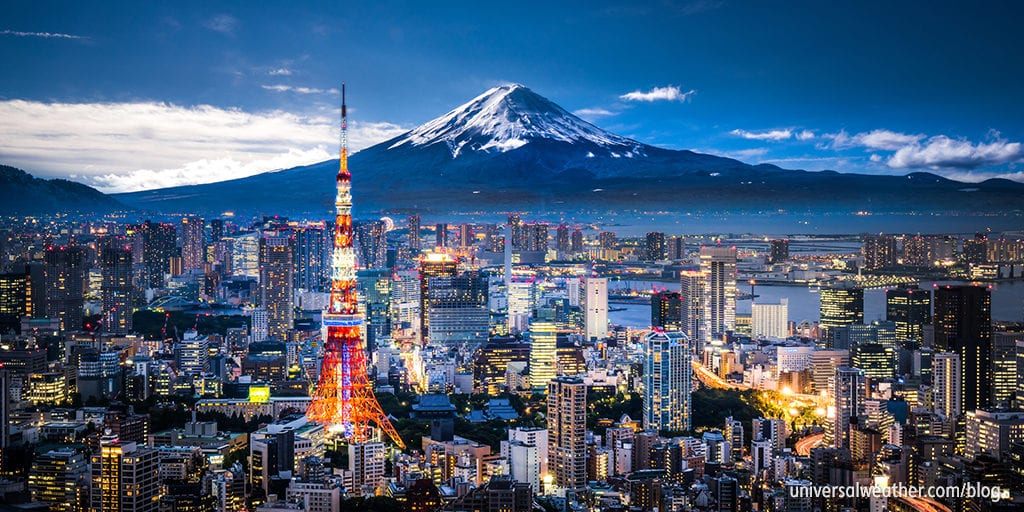
- Tokyo offers world-class infrastructure but operates within structured slot and parking frameworks.
- Haneda (RJTT) is closest to downtown and available 24 hours but has limited parking and shorter stay limits.
- Narita (RJAA) offers easier parking and longer stays but operates under a strict nightly curfew.
- Slot availability has improved in recent years, but peak periods still require advance planning.
- Refueling with passengers onboard is not permitted at Japanese airports.
Tokyo is one of the safest, most modern, and best-serviced destinations for business aviation in the Asia-Pacific region. With proper advance planning, operations are typically smooth and predictable.
“The quality of services in Japan is extremely high,” says Hiroshi Higashi of Universal Aviation Japan. “The main planning decision is choosing the airport that best matches the mission profile rather than worrying about service capability.”
Airport options
Tokyo is served by two major international airports:
- Haneda (RJTT)
- Narita (RJAA)
Both support general aviation operations but present different advantages.
Haneda is available to GA 24 hours per day and is significantly closer to central Tokyo. Narita operates from 0600 to 2259 local and enforces a strict overnight curfew.
Slot and parking availability have improved compared to several years ago, though Haneda remains more constrained during peak periods.
Narita also offers aircraft hangarage, which is not available for GA at Haneda.
“Haneda is preferred for passenger convenience,” Higashi explains. “Narita is often selected when parking duration or aircraft size makes Haneda impractical.”
Location in relation to destination
Haneda is approximately 20 kilometers from central Tokyo, with typical ground transport times of 15 to 40 minutes depending on traffic.
Narita is located about 65 kilometers from downtown, with travel times generally ranging from one to one and a half hours.
Helicopter transfers are available from Narita to locations across Tokyo at an approximate cost of USD 3,000 each way. Helicopter service is not available between Haneda and the city center.
“For tight schedules, proximity can outweigh all other factors,” Higashi notes. “That is why operators often try Haneda first.”
Airport hours and flexibility
Narita enforces a strict curfew from 2300 to 0559 local time. Limited approvals may be possible for departures between 2300 and 2359 local under specific conditions, but these are not routine.
Haneda’s 24-hour availability provides significantly greater scheduling flexibility.
“If late-night flexibility is important, Haneda is usually the better option, assuming parking can be secured,” says Higashi.
Parking
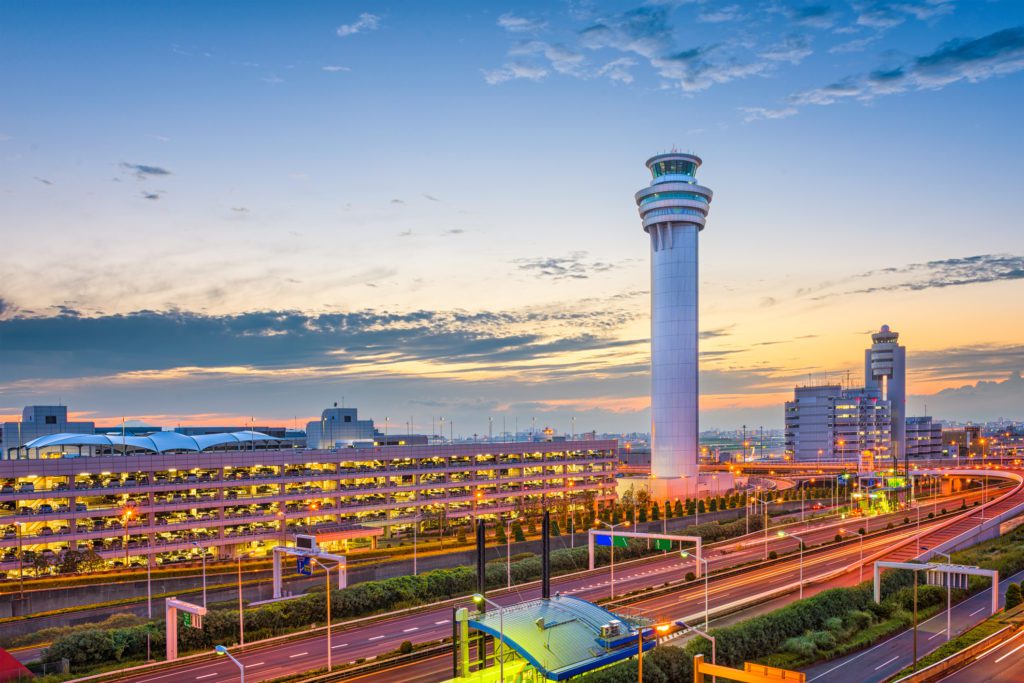
Haneda (RJTT)
Approximately 17 GA parking positions are available and are frequently fully utilized during busy periods.
Maximum parking duration is typically limited to four nights. Longer stays generally require repositioning.
A dedicated Business Aviation Gate with its own CIQ channel opened in 2021, improving passenger processing efficiency. However, parking remains the primary constraint.
“Parking at Haneda is the main limiting factor,” Higashi says. “Operators planning multi-day stays should consider alternate parking strategies early.”
Narita (RJAA)
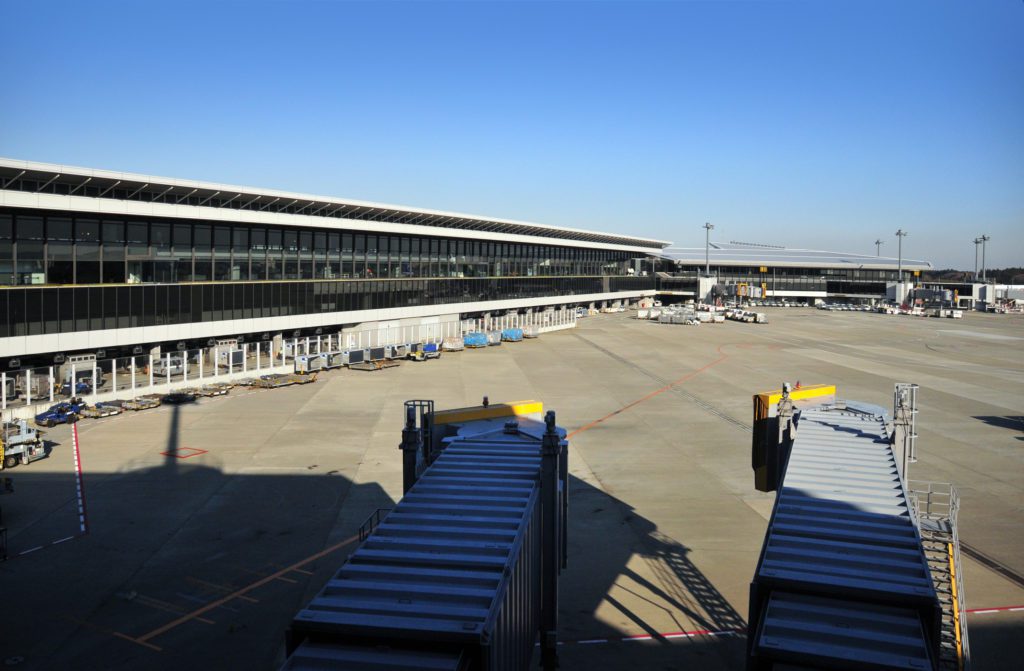
Narita offers approximately 18 GA parking positions, which are generally easier to obtain. Long-term parking of up to 29 nights is possible.
Airport slots and parking at Narita are seldom restrictive under normal conditions, and same-day approvals may be available.
Narita is often the preferred choice for extended stays.
Infrastructure and Ramp Conditions
Runways, taxiways, and ramp areas at Narita are in good condition and rarely impact GA operations.
Infrastructure at Haneda is also strong, though the taxiway leading to the GA parking area can be complex, particularly at night. Crews should exercise caution in this area.
Some ramp sections at Haneda have historically experienced water accumulation during heavy rain. Improvement projects have been ongoing with minimal impact on parking capacity.
Hangar space at Narita is available but extremely expensive. During severe weather such as typhoons, limited hangar access may be possible at significant cost.
Follow-me services are provided at both airports.
Airport slots
Slots are required for arrival and departure at both Haneda and Narita.
In many cases, slot confirmation can be obtained the day prior to operation, and same-day requests may be accommodated. Requested times are not guaranteed, particularly at Haneda.
“Slot availability has improved in recent years,” Higashi says. “But peak periods still require advance coordination.”
Most Common Planning Mistakes
The most frequent operational issue for operators unfamiliar with Tokyo involves misaligning parking duration, curfew restrictions, and slot timing across the two airports.
Some crews initially request extended parking at Haneda without realizing that stays are typically limited to only a few nights. Others plan arrivals or departures at Narita outside permitted operating hours.
“Some operators who are not familiar with Tokyo restrictions plan parking of more than five days at Haneda and operations during the curfew at Narita,” says Higashi. “At Narita, adjusting the schedule is usually straightforward. At Haneda, however, operators often must choose between shortening their stay or repositioning to another airport for parking.”
Because parking positions at Haneda are limited and in constant demand, delays in decision-making can quickly eliminate available options.
“While operators are evaluating alternatives, Haneda parking and slots may disappear,” Higashi explains. “Availability can change very quickly.”
Slot timing flexibility also requires rapid coordination once allocations are offered.
“When schedule changes occur after slot confirmation, we inform operators of the available times and ask them to confirm their preference,” Higashi says. “If the response is slow, other operators — including scheduled airlines — may take that slot. By the time confirmation is received, the requested time may no longer be available.”
These dynamics make Tokyo a destination where early planning and fast decision-making are critical.
Operators planning multi-day stays should evaluate repositioning strategies in advance and maintain close coordination with their ground handler throughout the planning process.
Handling, Facilities, and Equipment
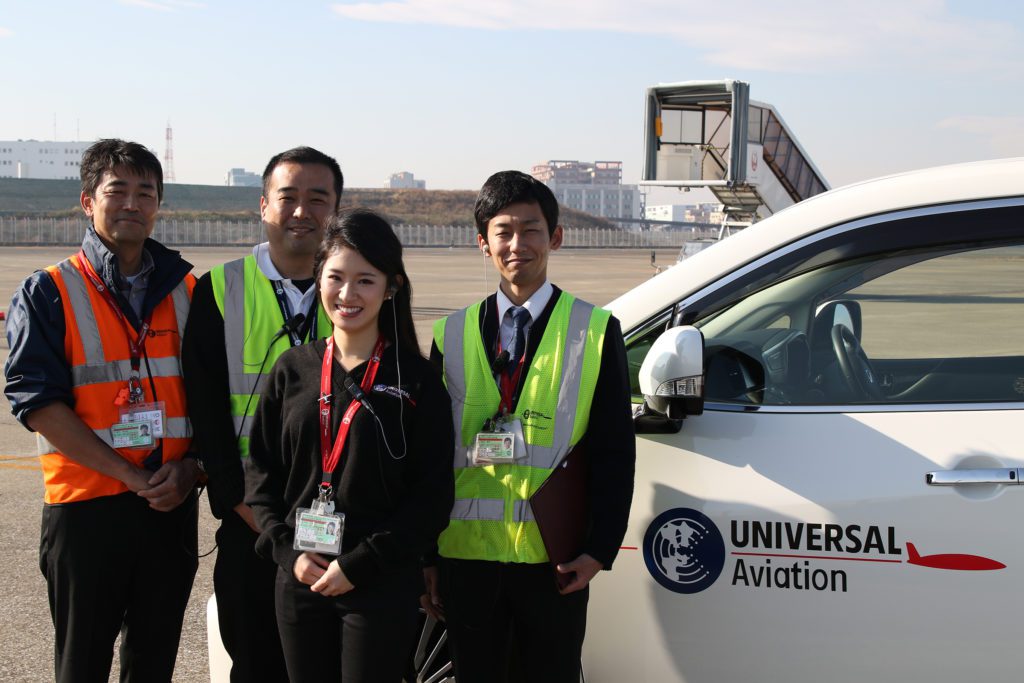
For more information on handling in Japan, Universal Aviation Japan can help.
Ground handling services in Japan are among the most reliable in the world, though costs can be higher than in many other regions.
There are no North American or European-style fixed-base operators. Aircraft park on general airport ramps, and handling services are coordinated by approved providers.
Complete ground support equipment is available at both airports. Operators should provide at least 24 hours’ notice to ensure services are properly arranged.
Hotels and Crew Accommodations
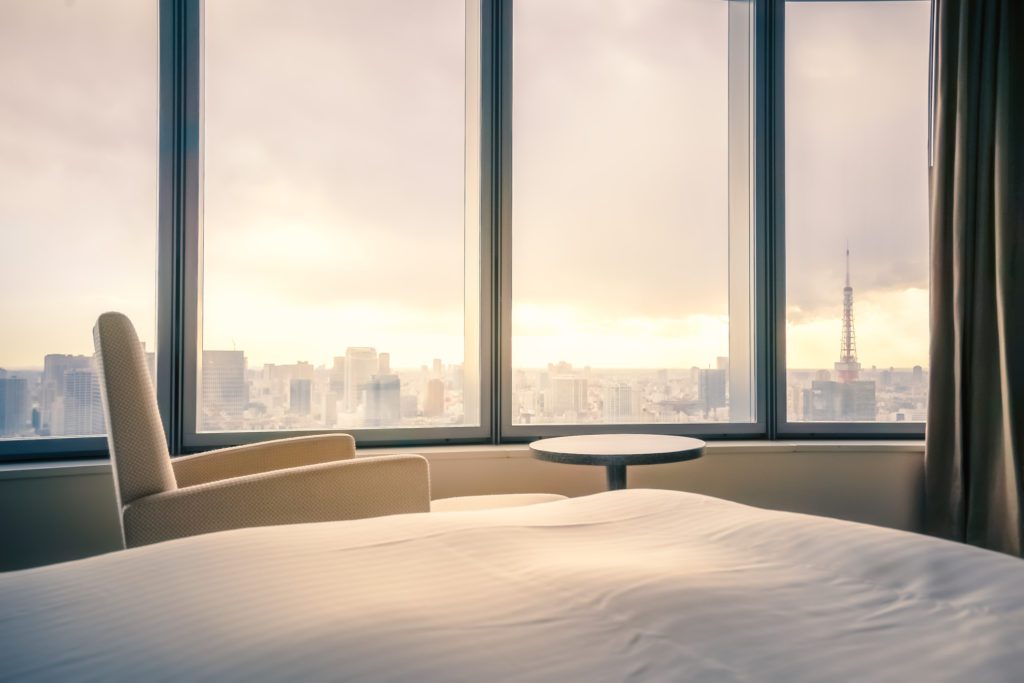
Airport hotels are available at both locations, though nearby options are typically limited to mid-range properties. Higher-quality accommodations are generally located in central Tokyo, where nightly rates often exceed USD 200.
Hotels frequently sell out during major tourism periods including:
- Golden Week in late April
- Cherry blossom season in late March
- Summer holidays in August
- Autumn foliage season in late October and November
During these periods, crew accommodations may require advance booking or extended travel from the airport.
Ground Transportation
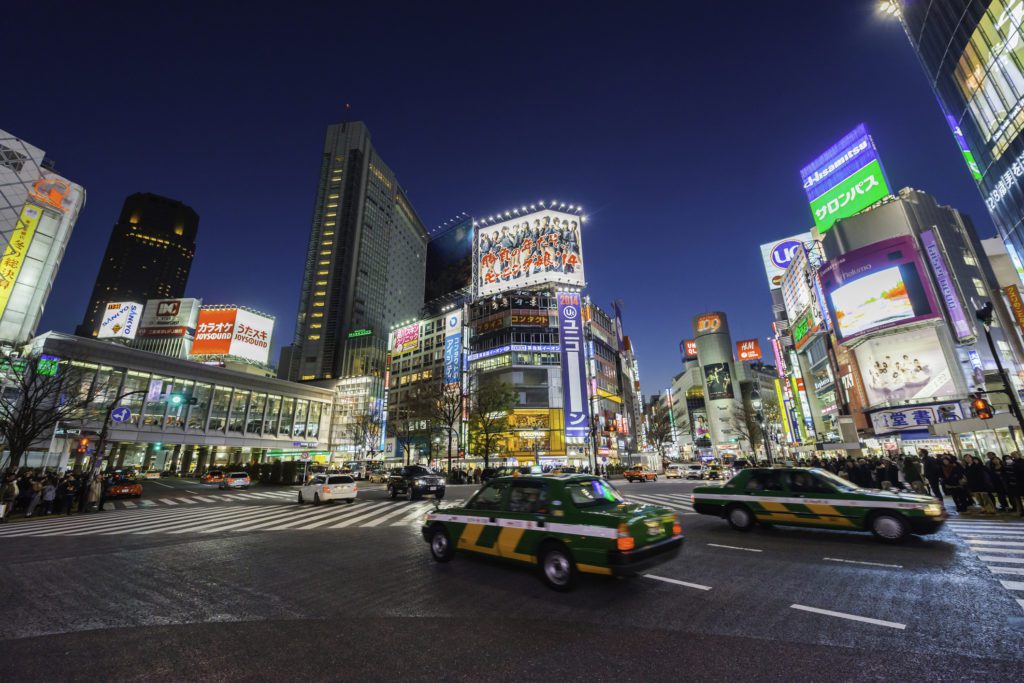 Pre-arranged transportation with a driver is strongly recommended.
Taxi drivers may have limited English proficiency, and rental cars are generally not practical due to language barriers and left-side driving conditions.
Airside pickup or drop-off by private vehicles is not permitted at either airport.
Fuel and Credit
Fuel availability is reliable at both airports but should be coordinated in advance to ensure staffing and equipment allocation.
Fuel releases should be provided to the handler before arrival. Cash payments are not accepted directly by fuel suppliers, though handlers may facilitate transactions if necessary.
Refueling with Passengers Onboard
Refueling with passengers onboard is not permitted at Japanese airports due to safety policies implemented by local fuel providers.
This restriction applies nationwide.
In-Flight Catering
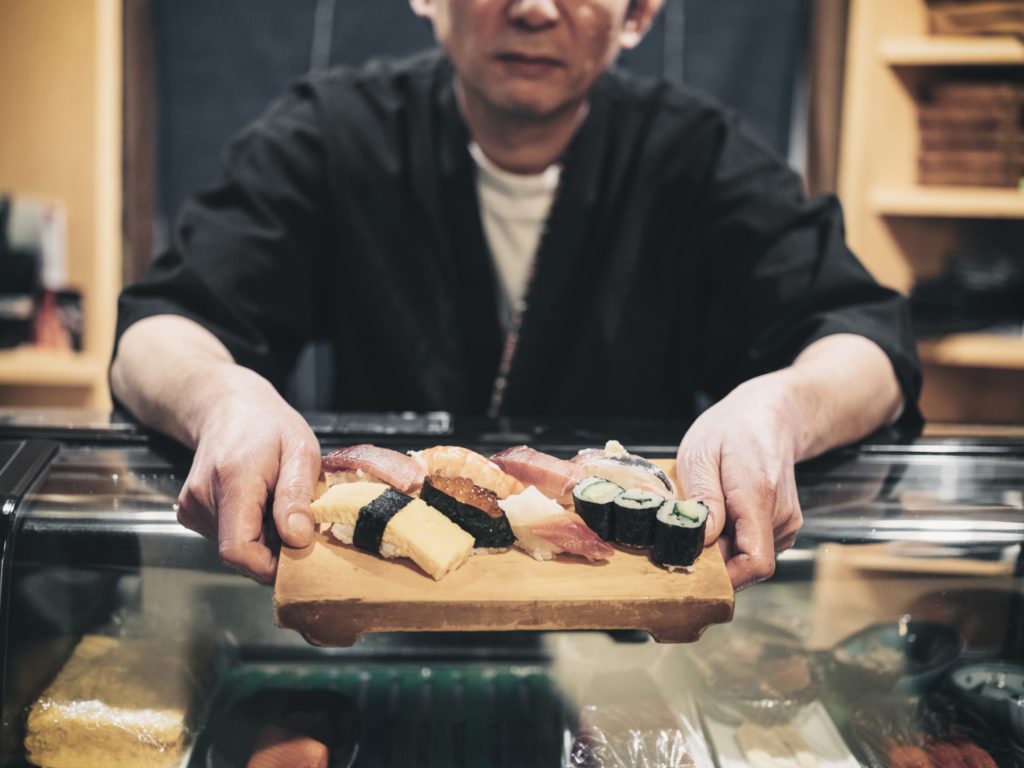
Catering can be sourced from airport caterers, hotels, or approved restaurants. A minimum of three days’ lead time is recommended, as shorter notice may limit options.
Some hotels and restaurants will not provide food intended for off-site consumption due to liability concerns. Handlers can coordinate approved catering sources and delivery airside.
Security
Airport security standards throughout Japan are high, with fencing, surveillance, and regular patrols.
Additional private security may be arranged, though armed guards are not permitted. Such services are rarely necessary.
Customs, Immigration, and Quarantine
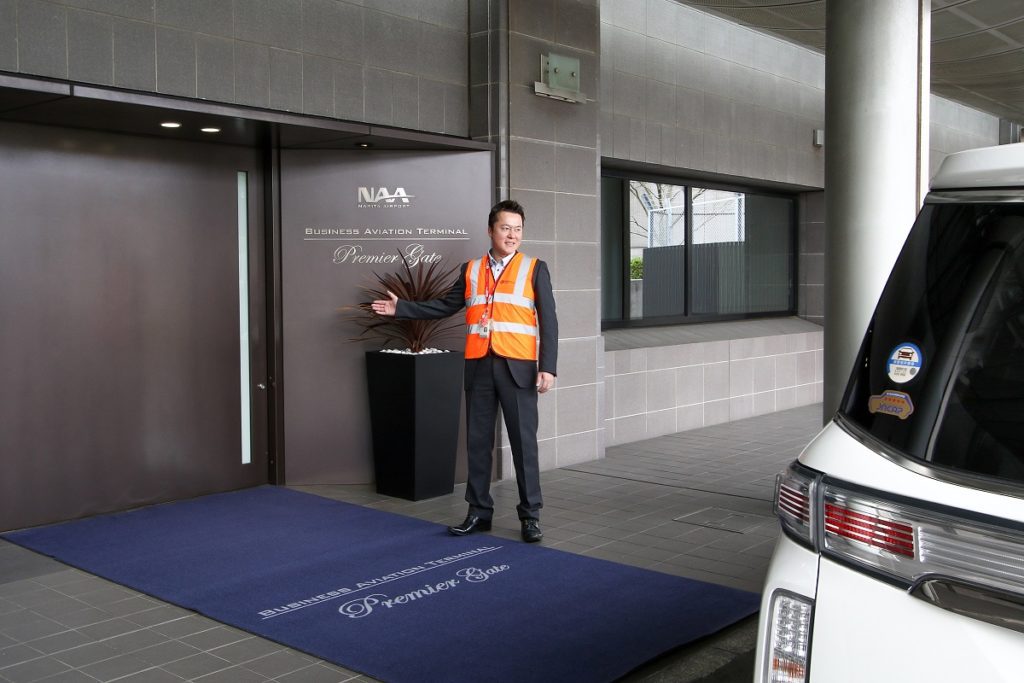
Express CIQ clearance is available via general aviation terminals at both airports for an additional fee.
Lead time requirements apply, and these services provide faster, more private processing than common terminal clearance.
Passengers who choose standard processing can expect wait times of approximately 30 minutes at Haneda and up to 90 minutes at Narita during busy periods.
Weather Considerations

Winter snow can occasionally restrict parking availability, particularly at northern Japanese airports and sometimes at Narita.
Japan’s rainy season typically runs from June through mid-July and can cause operational disruptions during heavy precipitation.
Typhoons are possible from June through October, and high winds or fog may result in temporary airport closures.
Peak Traffic Periods
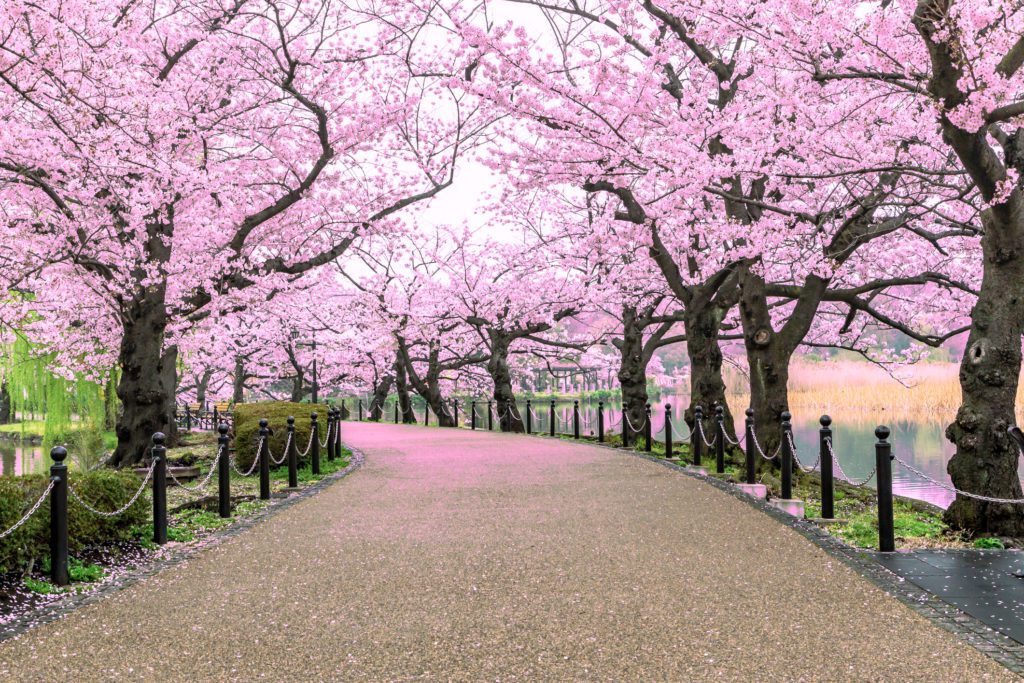
Annual high-demand periods in Tokyo include:
- New Year holidays
- Golden Week
- Cherry blossom season
- Summer holidays
- Autumn foliage season
- Christmas period
During these times, slots, parking, hotels, and services should be arranged as early as possible.
Final Planning Takeaway
Tokyo offers exceptional business aviation support, but successful operations depend on aligning airport selection with the mission’s priorities.
Haneda provides unmatched proximity and scheduling flexibility but requires early planning due to strict parking limitations. Narita offers longer stays and easier parking but operates under a firm overnight curfew and greater distance from the city.
“Choosing the correct airport from the start is the most important decision,” Higashi emphasizes. “When the airport matches the mission profile, Tokyo operations are typically very smooth.”
Operators should evaluate parking duration, schedule flexibility, passenger convenience, and repositioning requirements well in advance and maintain close coordination with their trip support provider throughout the planning process.