


Middle East Airspace Closures: Operational Impact on Business Aviation and GA Flights
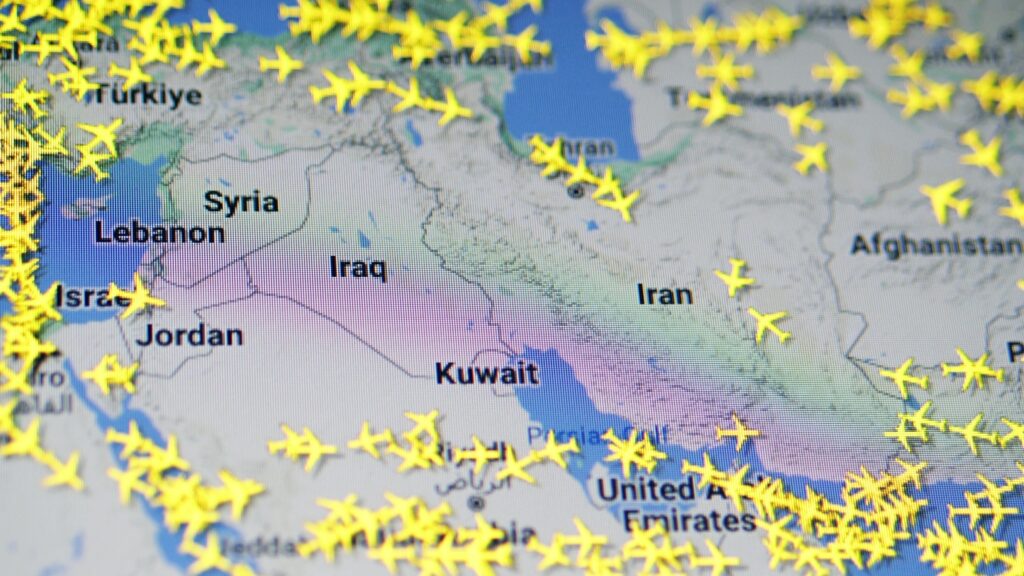
Airspace restrictions across the Middle East remain highly fluid, with multiple FIR closures extended across the Gulf and Levant.
Iraq, Kuwait, Bahrain, and Qatar remain closed to most traffic, with updated NOTAMs extending current restrictions. Syria’s Damascus FIR closure has again been extended with tightly defined routing exceptions. Israel restrictions have also been extended, with civil operations continuing under prior approval requirements.
The UAE continues to operate under structured routing corridors, and Jordan and Saudi Arabia remain open with extended advisories.
The overall operating environment remains constrained, with continued airspace compression affecting Europe–Asia traffic flows.
The ongoing conflict involving the United States, Israel, and Iran has materially reduced usable airspace across the Gulf and surrounding region. Multiple FIRs are closed, others are operating under restrictions, and remaining corridors are absorbing displaced traffic.
This is not a localized disruption. It is a regional airspace compression event affecting Europe, Gulf, and Asia traffic flows.
Current Airspace Status Snapshot
The operational picture across the Middle East continues to evolve rapidly as multiple FIR closures and restrictions remain in effect. The following reflects the current structure of usable airspace across the region.
Closed FIRs (no transit available)
- Tehran FIR (OIIX) – Closed except for limited state, military, SAR, hospital flights and flights operating with prior permission from the Iranian Civil Aviation Authority. The current NOTAM validity extends through 22 March 0830 UTC (estimated).
- Baghdad FIR (ORBB) – Closed due to operational reasons. The current NOTAM validity extends through 22 March 0900 UTC (estimated).
- Doha FIR (OTDF) – Closed to all traffic except state, medevac, and SAR aircraft operating with prior permission. The current NOTAM validity extends through 20 March 0259 UTC (estimated).
- Bahrain FIR (OBBB) – Closed to all traffic except prior-approved departures from Bahrain International Airport (OBBI) exiting via waypoint NARMI. The restriction remains in effect through 19 March 1600 UTC (estimated).
- Kuwait FIR (OKAC) – Closed due to operational reasons. The current NOTAM validity extends through 19March 1600 UTC (estimated).
Closed with limited exceptions
Damascus FIR (OSTT) – Closure extended through Mar 20 2100 UTC (est).
-
Aleppo operations via B544 TUSYR, M861 NISAP, W6 BANIAS NIKAS
-
Overflights restricted to NIKAS–BAN–W6–ALP–TUSYR–B544
-
Latakia via BAN–SALIM–TUNLA
-
Military flights authorized
Tel Aviv FIR (LLLL) – Restrictions extended through Mar 31 1000 UTC (est).
-
Civil arrivals/departures permitted with PPR
-
Military flights with Israeli Air Force approval
Latakia (LTK) operations may route via BAN–SALEM–TUNLA. Military flights remain authorized.
Partially restricted FIRs
Emirates FIR (OMAE) – Open but operating under tightly controlled waypoint corridors and flow management measures. Overflight routing flexibility is limited and westbound overflights are currently restricted to the LUDID waypoint.
Jordan FIR (OJAC) – Advisory extended through Mar 26 0600 UTC (est).
-
Delays expected
-
Extra fuel advised
Saudi FIR (OEJD) – Advisory remains extended through Mar 24 2359 UTC (est).
Routing Restrictions
Baku FIR (UBBA) – Restrictions extended through Mar 19 1600 UTC (est).
-
-
Waypoints ULDUS, BATEV, LALDA, PARSU remain unavailable
-
Routing alternatives unchanged
-
Aircraft operating:
-
to/from Yerevan FIR should route via MATAL, ELSIV, or PEMAN
-
to/from Turkmenbashi FIR should route via MARAL, METKA, RODAR, LARGI, or DUKAN
These restrictions reduce routing flexibility for operators using northern routings through the Caucasus.
These closures effectively remove the central Gulf transit structure that normally carries a large share of Europe–Asia traffic.
U.S. Government Advises Citizens to Depart Multiple Countries
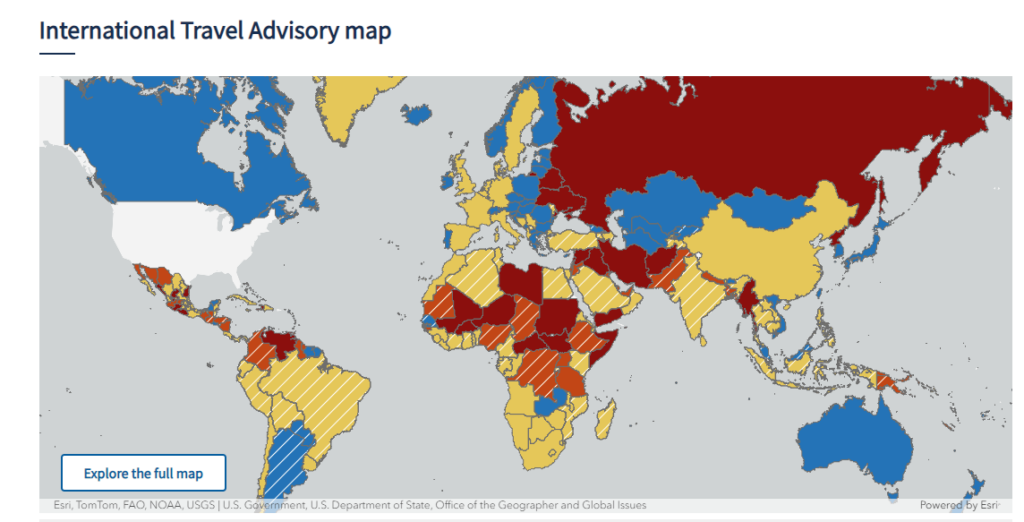
The operational environment is not only affecting airspace. The U.S. Department of State has updated travel advisories across multiple countries in the region and is urging U.S. citizens to depart several Middle Eastern nations due to escalating security risks. See the latest guidance from the U.S. Department of State – Consular Information for Americans in the Middle East.
These advisories, combined with corporate precautionary relocations and diplomatic movements, are contributing to increased evacuation and repositioning flights across the region.
For operators, this is creating additional traffic demand on top of already constrained airspace. The combination of FIR closures, restricted routings, and evacuation movements is contributing to elevated congestion across remaining Europe–Asia corridors.
Closed and Restricted FIRs Across the Central Gulf and Levant
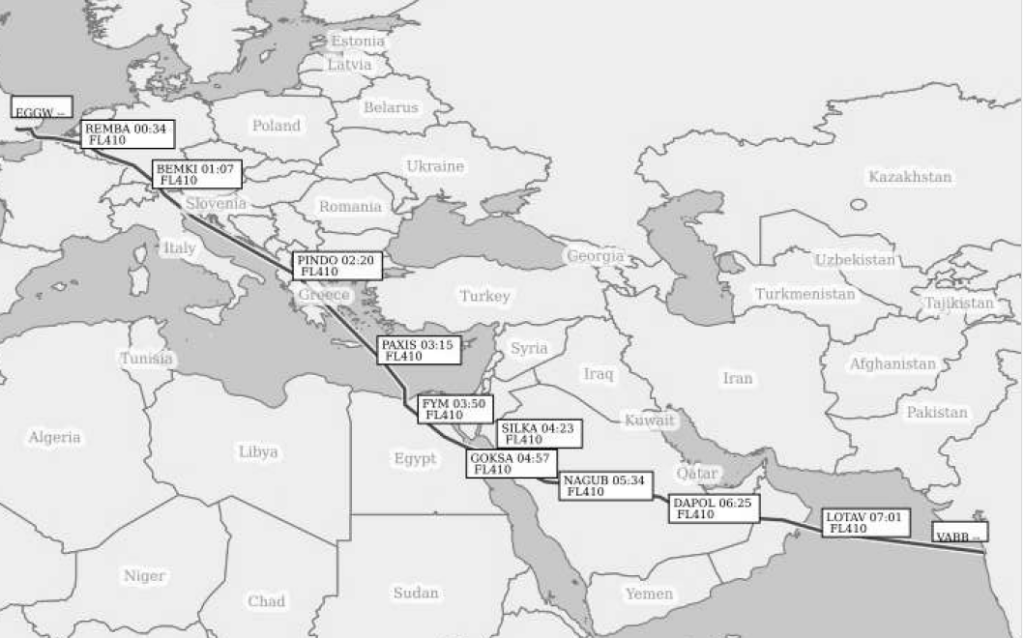
With Tehran, Baghdad, Doha, Kuwait, and most of Bahrain FIR effectively closed, there is effectively no direct through routing across the northern and central Gulf.
The Tel Aviv FIR (LLLL) also remains restricted, with civil arrivals and departures operating only with prior permission and military flights requiring Israeli Air Force approval.
The Emirates FIR (OMAE) remains partially open but is operating under tightly controlled waypoint corridors, active restricted areas, and flow management measures. Westbound overflights are currently limited to entry via waypoint LUDID.
Regional airspace capacity remains materially reduced, and operators should plan accordingly.
Routing Implications: Europe–Asia Traffic Is Reorganizing
With the central Gulf corridor largely unavailable, Europe–Asia traffic flows are reorganizing along two primary alternatives.
Southern routings are operating via Egypt, Saudi Arabia, and Oman before turning east toward the Indian Ocean and South Asia. This corridor is absorbing a significant portion of displaced traffic from the closed Gulf FIRs.
Northern routings are shifting through Turkey and the Caucasus before continuing toward Central or South Asia, though routing flexibility may be reduced by waypoint restrictions within the Baku FIR.
Both alternatives are experiencing elevated demand, increased ATC flow management, and reduced routing flexibility. As a result, dispatch teams should anticipate longer routings, higher fuel burn, and increased likelihood of tactical reroutes during both planning and enroute phases.
Operators should assume continued volatility as NOTAM updates and traffic demand evolve across the region.
UAE Is Open but Structurally Constrained
Relevant NOTAM:
-
OMAE A1086/26 – Emirates FIR partially closed: Arrivals and departures are restricted to designated waypoint corridors, overflights are limited to westbound transit via LUDID, and flow management measures may be implemented.
Operational implications:
- Traffic compressed into defined entry and exit fixes
- Tactical ATC reroutes likely
- Holding probability increased
- Congestion into OMDB, OMDW, OMAA, OMSJ, and OMRK
The Emirates FIR remains accessible only through designated waypoint corridors defined by the current NOTAM structure. Designated restricted areas are active, traffic sequencing measures are in force, and reports of satellite navigation interference add further operational considerations.
While UAE airports remain technically open under these constraints, commercial schedules continue to face disruption, with cancellations and relief operations replacing normal service patterns.
Jordan Airspace Status
Jordanian airspace remains open but operators should anticipate possible inbound delays due to regional traffic displacement.
Aircraft operating into Jordanian airports are advised to carry additional fuel to accommodate potential holding, sequencing delays, or tactical reroutes implemented by ATC.
Saudi Arabian Airspace Status
Saudi Arabian airspace remains open but authorities advise operators to carry sufficient contingency fuel due to potential delays or diversions caused by increased traffic volumes and regional routing changes. The current advisory NOTAM is valid through 24 March 2359 UTC (estimated).
Oman Is the Pressure Valve
Oman remains open but is managing dynamic airway closures and flow measures to absorb diverted traffic.
While no blanket FIR closure exists, operators should expect:
- Tactical reroutes
- Airborne sequencing
- Flow management initiatives
- Rapid NOTAM updates
Oman is currently the primary stabilizing corridor, increasing its strategic importance.
System-Level Impacts
With multiple FIRs closed and others restricted, regional airspace capacity is materially reduced.
Immediate operational risks include:
- Extended routing and increased fuel burn
- Reduced alternates flexibility
- Permit amendments due to rerouting
- Crew duty limitations on ultra long sectors
- Slot compression at Gulf hubs
- Increased probability of short-notice NOTAM updates
In compressed airspace environments, small planning assumptions create outsized operational risk.
Dispatch Reality: Route Planning Is Now Dynamic
For dispatch and trip planning teams, routing assumptions that were reliable even a few weeks ago may no longer apply. Many traditional Europe–Asia routings are no longer available, and the remaining corridors are subject to rapid NOTAM updates and tactical ATC flow measures.
Operators should expect routing revisions during the planning phase and potentially again prior to departure. Conservative fuel planning, flexible overflight permit coverage, and close coordination with handlers and flight planning providers are increasingly important in the current environment.
This is not simply a longer route planning exercise. It is an environment where routing availability can change within hours.
Secondary Effects: Europe Is Now Feeling It
The impact is no longer confined to the Gulf. European airports are now absorbing operational spillover as operators reposition aircraft and reroute long haul sectors.