


Operating to Japan’s Congested Airports: What Business Aviation Operators Need to Know
For more information on Japan, visit our destination guides:
Over the past several months, access to Japan’s major airports has become materially more difficult for business aviation operators. While this trend has been building for some time, recent coordination with Universal Aviation Japan confirms that slot and parking constraints have tightened further, particularly since the start of the IATA S25 season.
Several airports are formally designated as “congested airports” under IATA coordination rules, including Tokyo Haneda (RJTT), Tokyo Narita (RJAA), Kansai–Osaka (RJBB), Fukuoka (RJFF), and Shin-Chitose (RJCC). This designation allows authorities to regulate access through strict slot and capacity controls designed primarily to protect scheduled airline operations.
For business aviation operators, this framework has very real operational consequences.
How Japan’s Monthly Slot System Actually Works
Based on guidance from Universal Aviation Japan, General Aviation slot access at congested airports is governed by a monthly application system.
GA operators may submit slot requests around the 10th of each month for operations planned in the following month. Allocation results are typically announced around the 20th. Between those dates, no slot applications are accepted.
Once results are released, any remaining capacity enters a competitive daily coordination phase, during which all operators—including airlines, GA, media, police, and government flights—apply for residual slots.
Airlines are always top priority. This is not discretionary; the system is explicitly designed to protect airline schedules.
One important exception is Nagoya Chubu (RJGG), which does not operate under the monthly application system. At RJGG, GA slot requests may begin at the published daily coordination start times.
Why Haneda Remains the Most Restrictive Airport
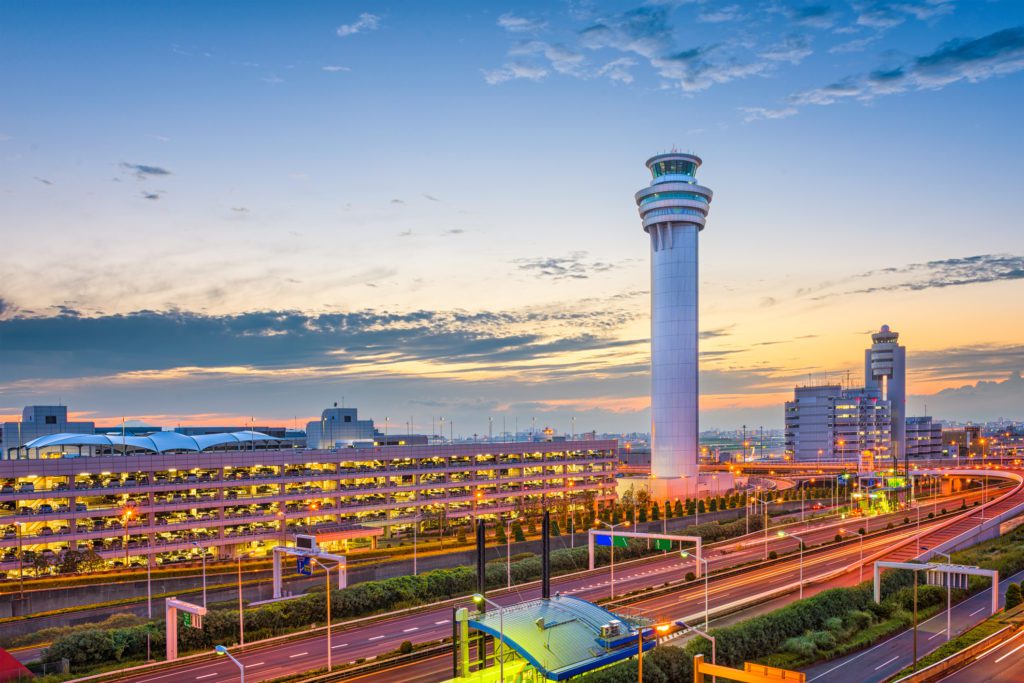
Among Japan’s congested airports, Tokyo Haneda (RJTT) continues to present the greatest challenge for business aviation.
RJTT limits General Aviation to 16 total day slots per day between 0600 and 2300 local. In addition, Japan’s aviation authority enforces rolling capacity limits over 3-hour and 1-hour windows for all operators, including airlines.
As Hiroshi Higashiyama, Representative Director, Universal Aviation (Japan), explained:
“Even if daily GA slots are not fully used, once the three-hour or one-hour capacity is full, no additional slots can be assigned. This regulation applies to all airports but has the greatest impact on Haneda slot coordination.”
In practical terms, operators may see apparent availability on paper but still be unable to secure a usable slot during peak demand periods.
Since the start of the IATA S25 schedule, Haneda slots have become increasingly saturated, and preferred time windows are now much harder to obtain.
Parking Is a Separate Gate — and Often the Limiting Factor
A common misconception is that slot approval alone guarantees an operation. In Japan, that is not the case.
Authorities evaluate slots and parking availability together, and operations may be rejected due to parking constraints even when slots appear available.
According to Higashiyama:
“Our Civil Aviation Authority checks not only slots but also parking spots. Even if slots are available, operations may be rejected due to lack of parking. These limits are enforced to be fair to all operations, including airlines.”
Current parking limits being enforced include:
-
RJTT (Haneda): Maximum 5 days for GA
-
RJBB (Kansai): Maximum 72 hours
-
RJAA (Narita): Up to 30 days, subject to availability
-
RJCC (Shin-Chitose): No parking from December 1 through March 31
-
RJFF (Fukuoka): One GA parking spot only, maximum 48 hours
These limits are applied strictly to prevent long-stay aircraft from occupying limited capacity.
Why Narita Often Makes More Sense
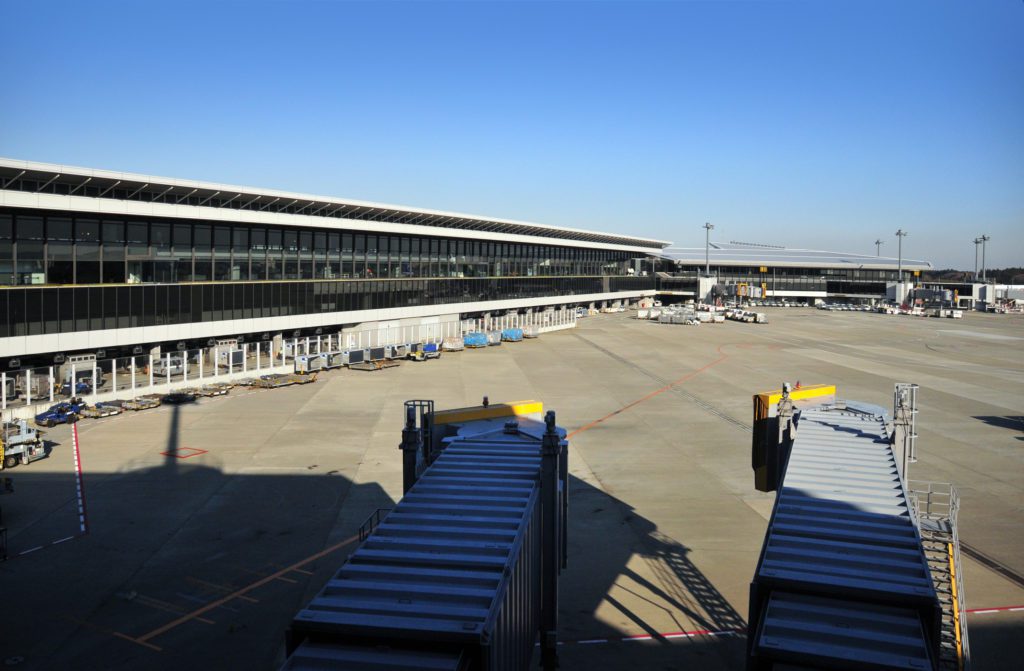
While Haneda access continues to tighten, Narita (RJAA) generally offers greater flexibility for business aviation. Many airline slots at Narita remain unused, making access comparatively easier.
That said, parking availability is still reviewed independently, and Narita should be viewed as more flexible—not unrestricted.
What Operators Should Take Away
Japan’s congested airport framework is rigid by design and consistently enforced. Handlers and trip support providers cannot override capacity rules once limits are reached.
Operators planning flights into Japan’s congested airports should assume:
-
Monthly slot deadlines are non-negotiable
-
Airlines receive priority in all allocation phases
-
Time-based capacity limits can block slots even when daily totals remain
-
Parking approval is as critical as slot approval
-
Short-notice flexibility is extremely limited
Bottom Line
Japan’s congested airport system reflects a mature, airline-protective regulatory framework with little tolerance for exceptions. As demand continues to rise—particularly at Haneda—successful operations will depend on early planning, realistic expectations, and well-positioned alternates.
These constraints should be treated as baseline planning assumptions for any business aviation operation into Japan’s congested airports.